Realogram vs planogram: what is actually on the shelf versus what was planned
The planogram is the intention. The realogram is the fact. The real value is in comparing the two and turning the gap into action.
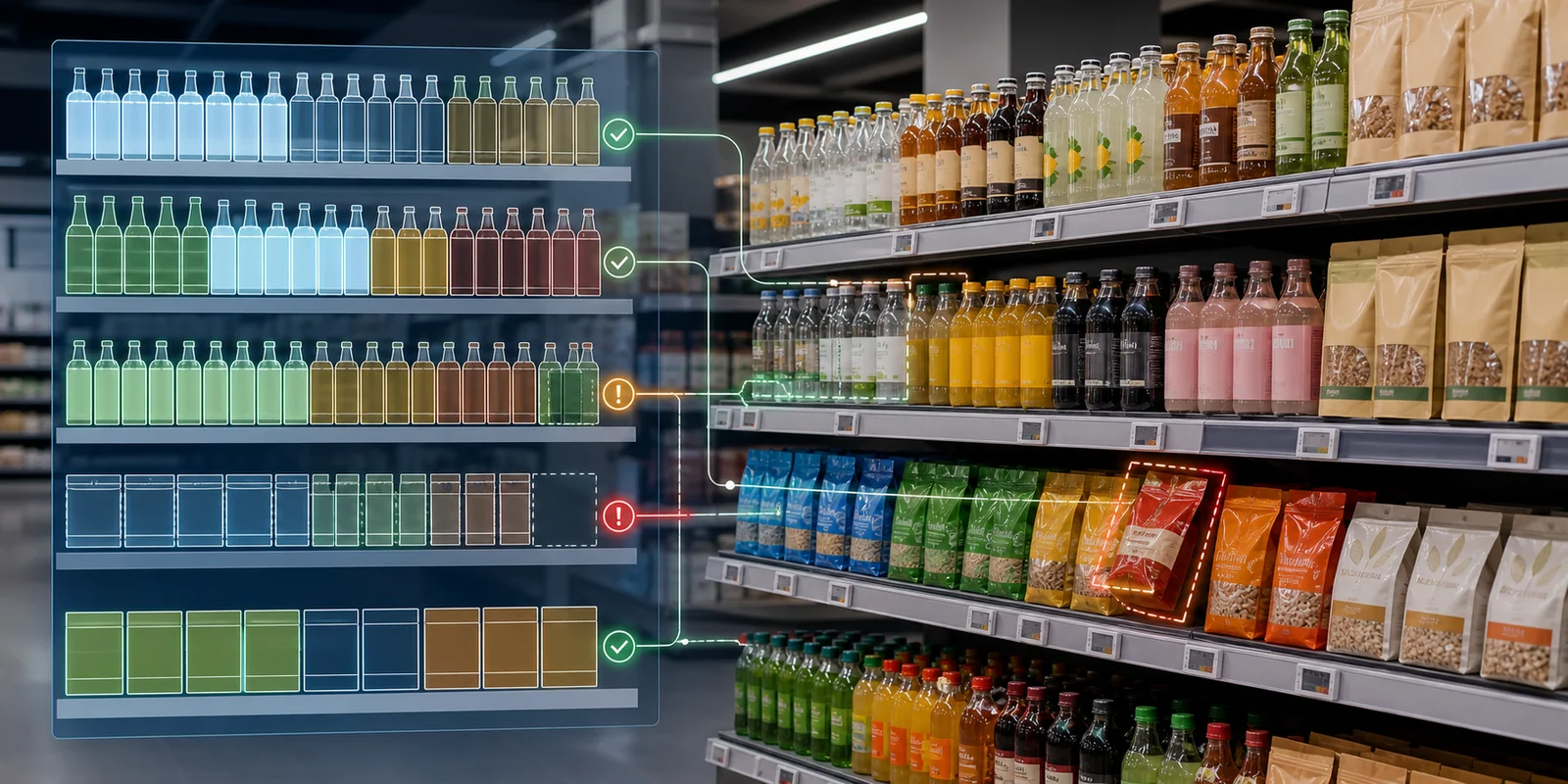
The planogram shows what should be on the shelf.
The realogram shows what is actually on the shelf.
This distinction looks simple, but in FMCG it is critical. Many companies have planograms, standards, agreed blocks and category guidelines. The problem is that a document does not execute the shelf by itself.
The shelf is executed inside the store.
And inside the store there are people, deliveries, competitors, out-of-stocks, promotions, incorrect prices, store staff rearranging products and daily operational noise.
That is why the real question is not “do we have a planogram”. The real question is:
What is the difference between the planned shelf and the real shelf today?
The planogram is the intention
A planogram is a business design.
It defines:
- which SKUs should be present;
- where they should be placed;
- how many facings they should have;
- how the brand block should look;
- which products should be at eye level;
- where the promo zone should be;
- what the category standard is for this store format.
A planogram is not just a diagram. It carries commercial logic: visibility, category flow, margin, sales velocity, agreed shelf positions and brand priorities.
A weak planogram is a problem. But more often the issue is different: a good planogram that is not executed.
The realogram is the fact
A realogram is the structured description of the actual shelf.
Not just a photo.
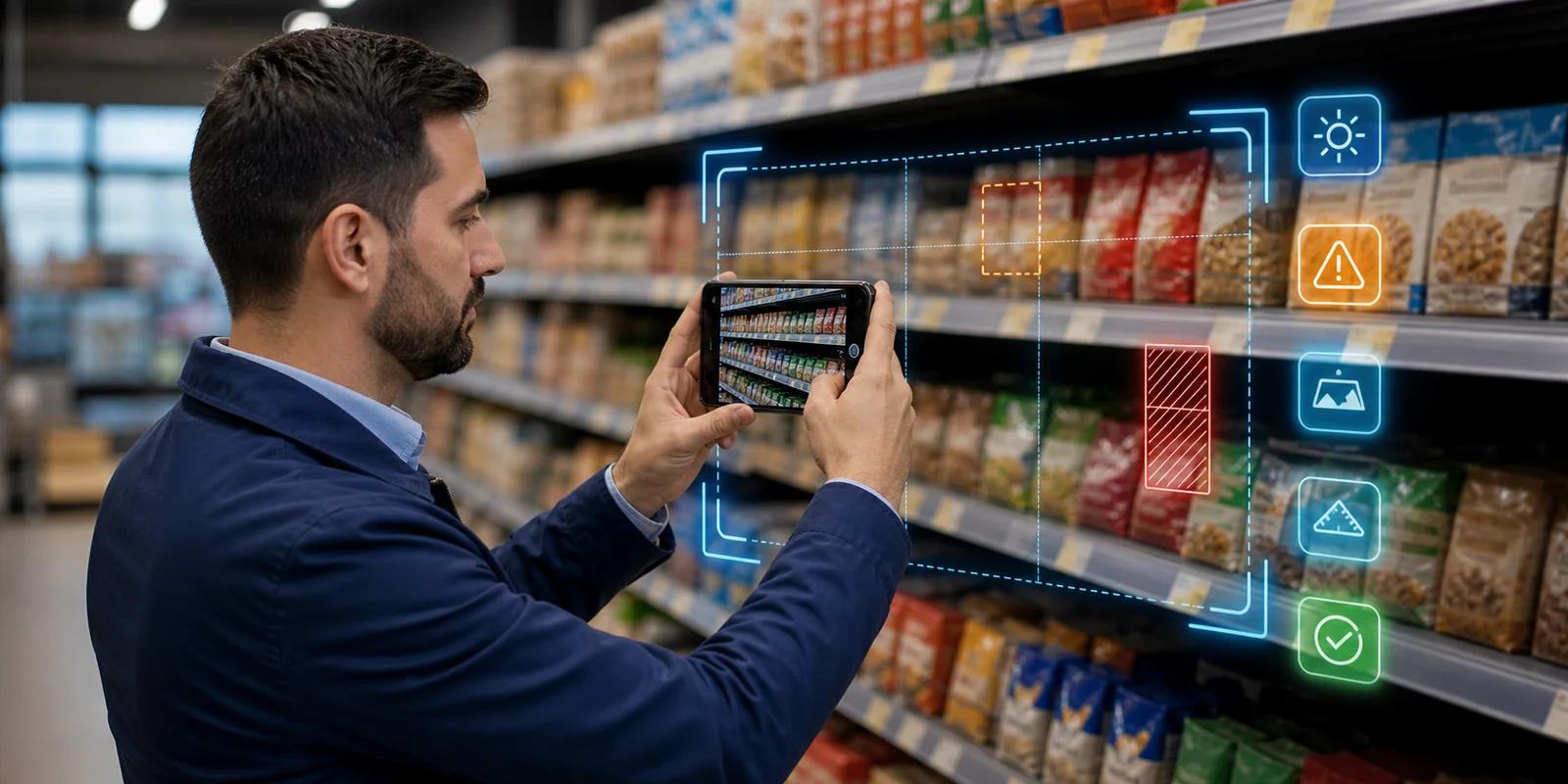
The photo is evidence. The realogram is the data extracted from it:
- which products are visible;
- where they are located;
- how many facings each SKU has;
- which positions are empty;
- which products are misplaced;
- whether competitor intrusion is present;
- whether prices and shelf labels are visible;
- whether the promo SKU is in the right zone.
Image recognition turns the shelf image into a realogram. This is the moment when the shelf can be compared, measured and managed.
Why a photo without a realogram is not enough
Many retail execution processes use photos as proof.
The sales rep captures the shelf. The supervisor reviews the image. Sometimes the key account team uses it as evidence.
This helps, but it does not scale well.
If you have thousands of stores and dozens of categories, a person cannot review every image every day and produce an objective assessment. Even if they could, the result would be subjective: one person sees “good enough”, another sees a violation.
The realogram solves this by making the image structured.
Now the team can ask:
- is a must-stock SKU missing;
- are facings below standard;
- is there wrong placement;
- is there a gap on a hero product;
- is the brand block interrupted by a competitor;
- is there a mismatch between price and promotion;
- is the same issue repeating in the same store.
The comparison is where value appears
Planogram and realogram are useful separately.
But the business value comes from comparison.
| Planogram | Realogram | Business meaning |
|---|---|---|
| SKU should be present | SKU is missing | missed sale or supply risk |
| 4 facings required | 2 facings actual | lower visibility and shelf share |
| product should be at eye level | product is on a lower shelf | visibility loss |
| brand should be blocked | products are scattered | weaker brand impact |
| promo SKU should be central | promo SKU is missing | promo execution gap |
| competitor should not occupy the zone | competitor takes the position | agreed shelf space is violated |
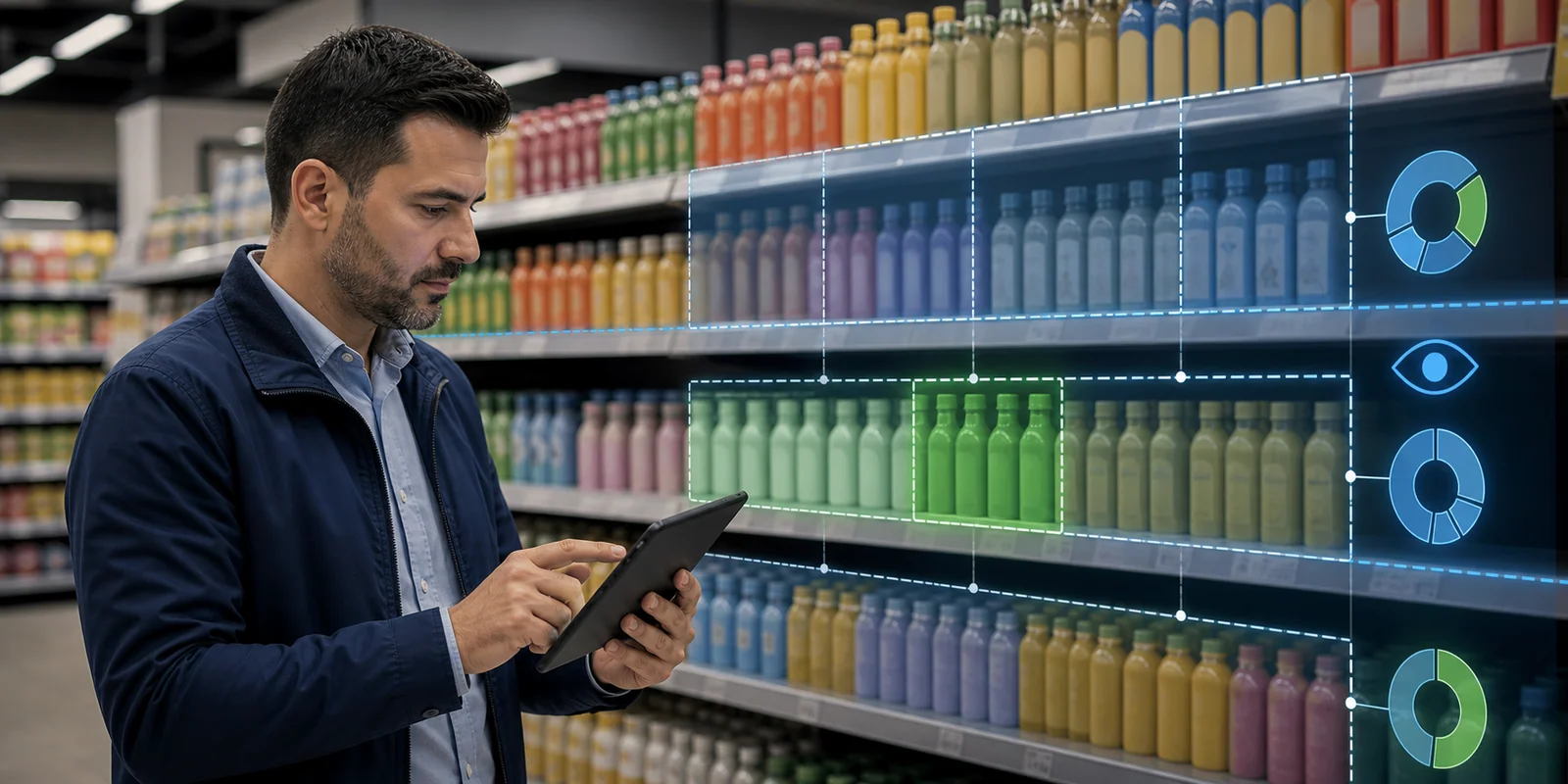
This is where Planogram compliance becomes more than a percentage. It becomes gap intelligence.
Not every gap matters equally
One common mistake is treating all deviations as equal.
A missing hero SKU is not the same as a small placement change on a slow-moving product. Low share of shelf in a key category is not the same as a minor layout gap in a peripheral segment.
Realogram vs planogram comparison needs severity:
- critical: key SKU missing, major out-of-stock risk, promotion not executed;
- high: strong facing mismatch, wrong position of an important product;
- medium: partial brand block or category violation;
- low: minor arrangement issue without major commercial effect;
- review: AI is not confident enough for automatic decision.
This protects the team from noise. If every deviation is an alarm, no deviation is a priority.
Realogram should lead to action, not only a dashboard
The most common trap is building a beautiful dashboard.
Compliance score. Heatmap. Photos. Regional percentages.
This is useful, but it is not enough.
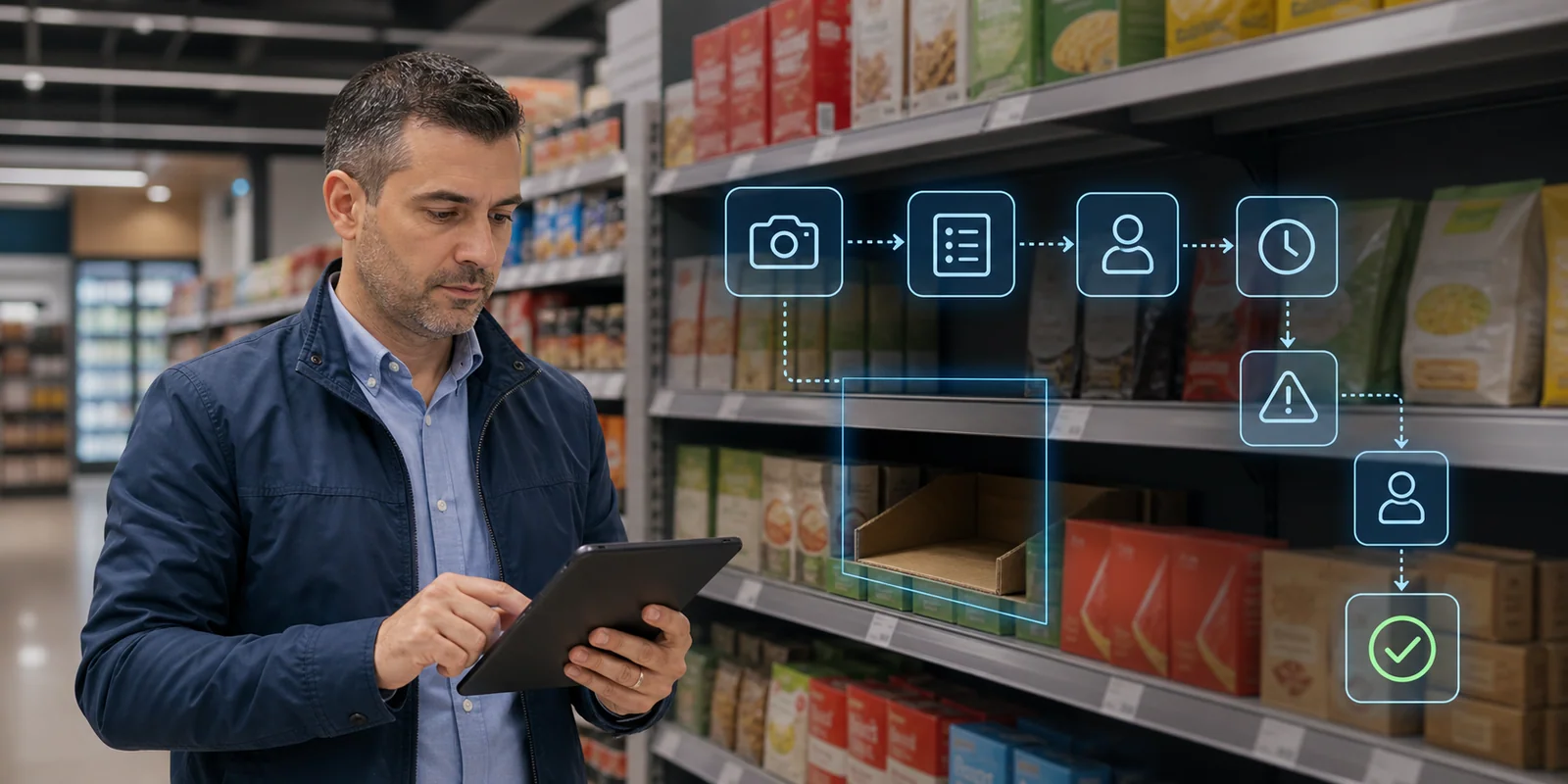
If the realogram shows a problem, the system must decide what happens next:
- can the sales rep fix the shelf immediately;
- should an issue be created;
- should the supervisor visit the store;
- is there a supply problem;
- should the recommended order change;
- should key account verify an agreement;
- what evidence closes the gap.
Workflow orchestration is critical because a gap without an owner remains a report. A gap with an owner, due date and closure evidence becomes execution.
The link with recommended order
The realogram is not useful only for shelf compliance.
It can improve the order as well.
If the realogram shows a missing SKU, weak facing count or empty slot, AI Order Brain can use that signal to improve the recommended order. But this needs to be done carefully.
A missing product in the photo can mean:
- true out-of-stock;
- product is in the store backroom but not replenished;
- the image is cropped;
- the product is occluded;
- the SKU has new packaging;
- the planogram is no longer up to date.
That is why confidence and Shelf image quality matter. A bad photo should not create a bad order.
How to think about the data model
A good realogram system does not store only an image.
It stores a structured shelf event:
- store;
- date and visit;
- category;
- shelf zone;
- SKU detection;
- position;
- facings;
- price label;
- promo signal;
- confidence;
- planogram version;
- gap type;
- severity;
- action status.
This enables trend analysis:
- which stores repeatedly violate the planogram;
- which categories have the most gaps;
- which SKUs are losing facings;
- which promotions are not executed;
- which images most often go to manual review;
- which gaps close quickly and which ones repeat.
The realogram then becomes part of retail execution intelligence, not only a computer vision output.
In short
The planogram is the planned shelf.
The realogram is the real shelf.
The value is not only having both. The value is comparing:
- what should be there;
- what is actually there;
- which deviation matters;
- who should fix it;
- when it is closed;
- how it affects sales, order and Perfect Store score.
When realogram vs planogram is managed correctly, the photo stops being evidence after the event.
It becomes an operational signal during the same visit.
Related in Optimasoft
- Image recognition turns shelf photos into realograms.
- Computer vision for shelf explains the pipeline from detection to business action.
- Planogram compliance shows how execution is measured against the standard.
- Shelf image quality is critical for a reliable realogram.
- AI Order Brain can use realogram signals for a better recommended order.
- Perfect Store scorecard turns these signals into a weighted store standard.
Sources
- Real-time retail planogram compliance application using computer vision and virtual shelves - PMC
- Computer Vision Based Planogram Compliance Evaluation - Applied Sciences
- U-PC: Unsupervised Planogram Compliance - CVF/ECCV
- A comprehensive survey on computer vision based approaches for automatic identification of products in retail store - Image and Vision Computing
Related articles