Human-in-the-loop AI in FMCG: why control is an advantage, not a bottleneck
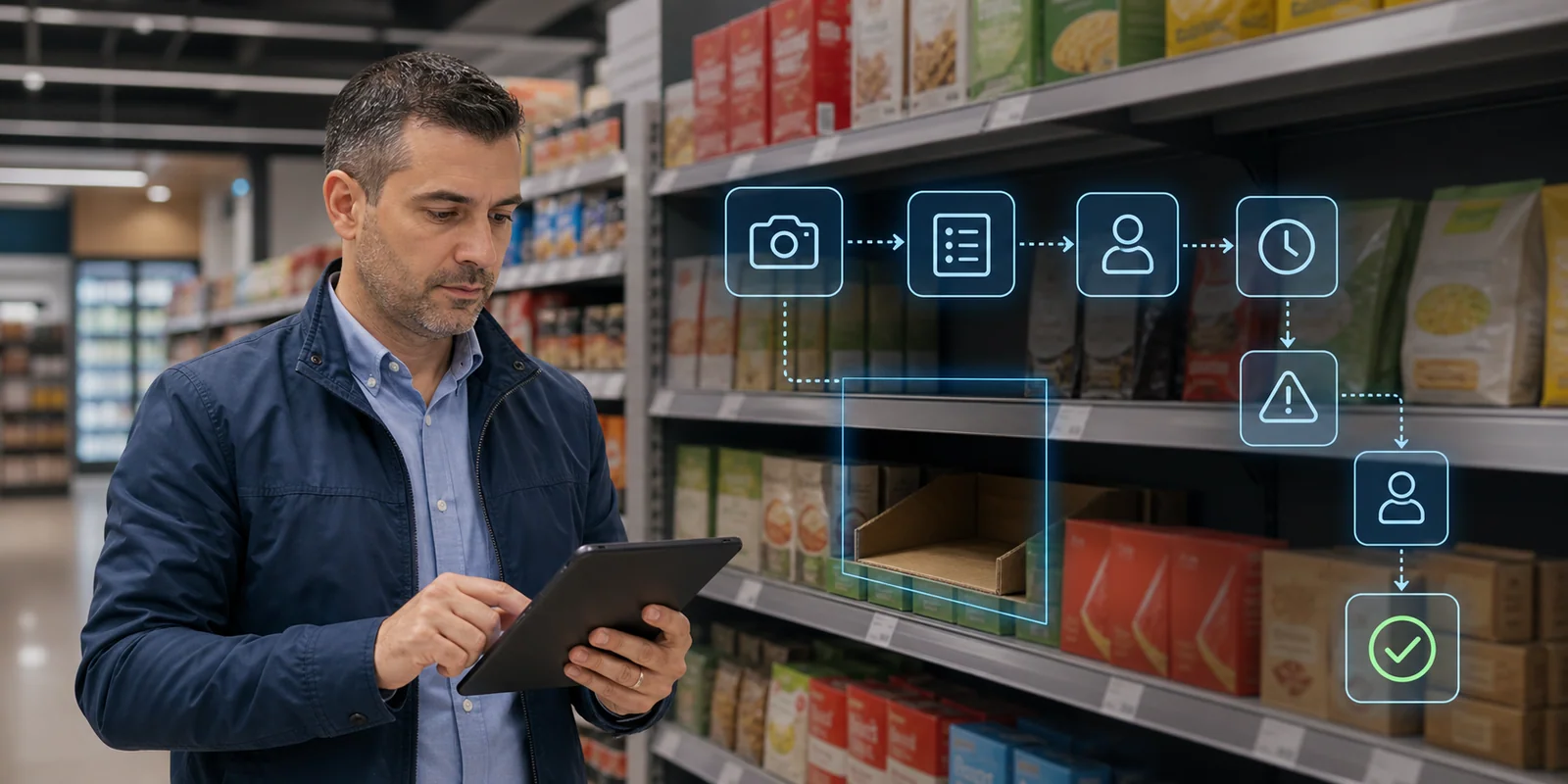
In real FMCG field work, AI does not earn trust by acting without people. It earns trust when it recommends clearly, explains why, allows override and keeps an audit trail.

When people talk about AI, they often talk about autonomy.
How much can the system do on its own? How many human actions can it replace? How many processes can it automate?
In FMCG, that is an incomplete question.
The real field is full of context: customer relationships, local exceptions, cash flow, shelf reality, promotions, deliveries, credit limits, trust and commercial conversations.
That is why human-in-the-loop is not a bottleneck.
Often it is the condition for AI adoption.
AI should recommend. The human should be able to understand, correct and take responsibility.
Why full automation is not always the right start
Automation is good when:
- rules are clear;
- risk is low;
- data is stable;
- result is easy to verify;
- exceptions are few.
But many FMCG decisions are not like that.
For example:
- recommended order for a customer with cash flow problem;
- quantity change during active promotion;
- escalation to key account;
- closure of OSA issue;
- customer commitment;
- credit-related action;
- route priority change with local exception.
Here the human is not the problem. The human is the context.
Human-in-the-loop in recommended orders
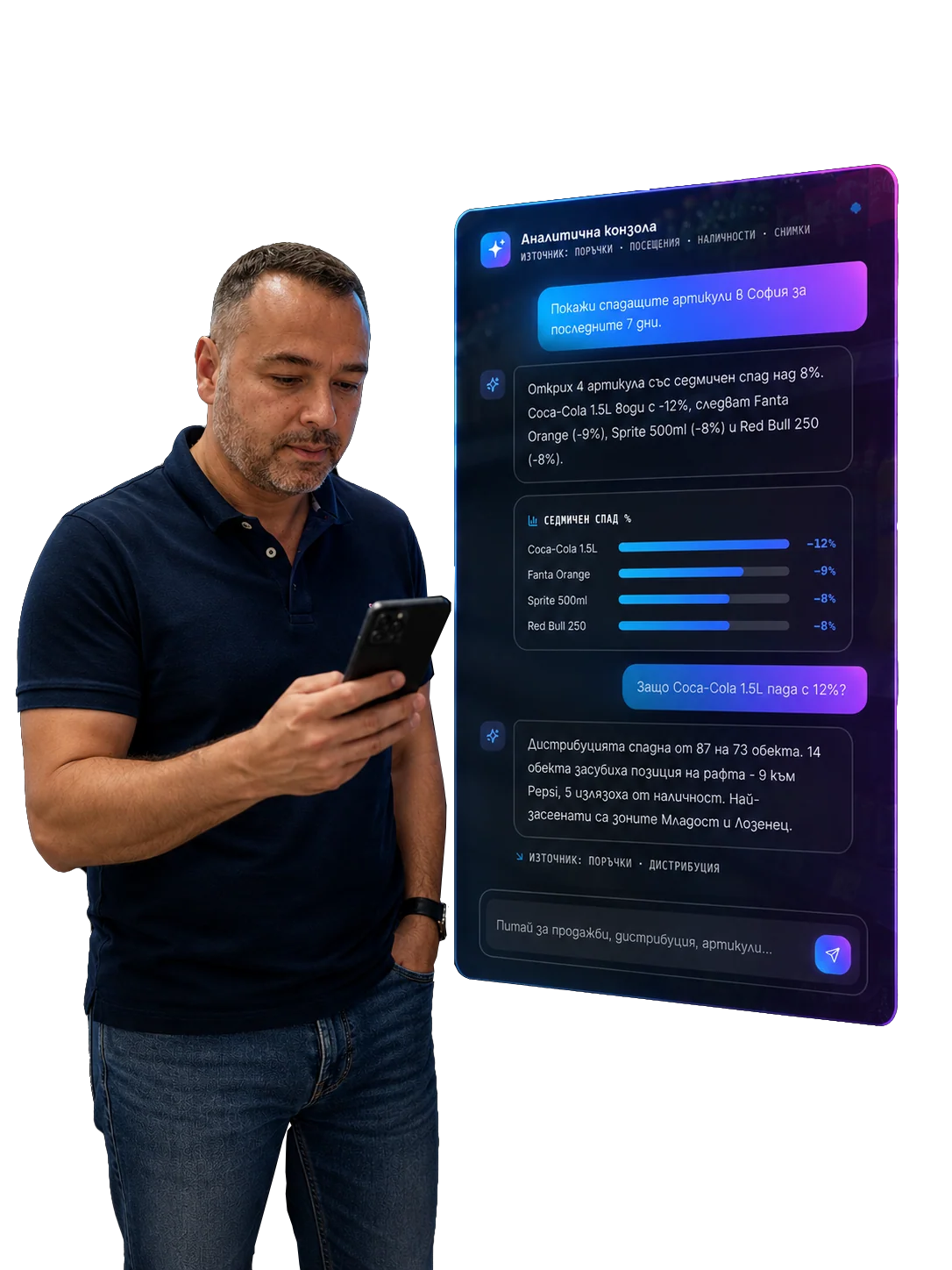
AI Order Brain can suggest quantity, but the representative needs to see why.
A good recommendation includes:
- quantity;
- reason;
- confidence;
- risk;
- previous behavior;
- promotion context;
- OSA signal;
- override option;
- reason code for override.
The representative can accept, change or reject the recommendation.
That is not weakness. It is a feedback loop.
If representatives constantly correct a recommendation in one category, maybe the model misses context. If a specific customer always refuses, maybe there is relationship or cash flow issue. If recommendations are accepted and reduce OOS, the model earns trust.
Human-in-the-loop in AI agents
AI agents can prepare follow-up, summary and escalation.
But critical actions need approval gates.
Example:
- the agent creates reminders automatically;
- the agent prepares escalation summary automatically;
- the agent suggests owner automatically;
- human approves critical escalation;
- human confirms closure;
- human approves customer-facing commitment.
This enables agentic automation without chaos.
Override is not failure
Many systems treat override as negative.
In FMCG, override can be a valuable signal.
The representative may know:
- the customer is renovating;
- the owner is absent;
- delivery day changed;
- competitor has temporary promotion;
- customer has cash issue;
- product was returned due to shelf life;
- there is local event or seasonality.
If the system does not allow override, people will bypass it.
If it allows override with reason code, it learns.
What should be logged
Human-in-the-loop does not work without audit trail.
The system should store:
- what recommendation was given;
- based on which signal;
- who accepted or changed it;
- what reason was captured;
- whether approval happened;
- what action followed;
- what result happened;
- whether the problem repeated.
This matters for both trust and governance.
EU AI Act makes this topic even more important: not every FMCG AI solution is high-risk, but transparency, control and traceability become normal expectations.
When a human should be mandatory
Practically, a human should participate in:
- customer commitment;
- order change with large financial impact;
- credit-related decision;
- closure of critical issue;
- escalation to key account;
- disputed AI signal;
- low confidence;
- action with legal or contractual effect;
- sensitive customer relationship.
Automation can prepare. The human confirms.
When AI can act alone
Some actions can safely be automatic:
- reminder;
- low-risk follow-up task;
- daily summary;
- grouping repeated issues;
- suggestion of route priority;
- draft supervisor brief;
- missing evidence alert;
- low-risk notification.
These are low-risk actions with clear audit.
In short
Human-in-the-loop AI in FMCG is not compromise.
It is how AI becomes usable.
A strong model:
- AI recommends;
- the human understands;
- the human can correct;
- the reason is captured;
- the action is logged;
- the result is measured;
- the system learns.
Control does not kill AI.
Control creates trust, and trust is the condition for AI to change field work.
Related in Optimasoft
- AI Order Brain uses a human-in-the-loop model for recommended orders with reason and override.
- AI agents work best with approval gates, owner and audit trail.
- Workflow orchestration defines where AI acts alone and where it waits for a human.
- EU AI Act and your business software places AI control in regulatory context.
- AI sales assistant shows how control looks inside the visit.
Sources
Related articles