Cold equipment in FMCG: the cooler is a commercial asset, not just equipment
A cooler creates value only when it is in the right place, working, maintaining temperature, filled with the right products and driving sales.
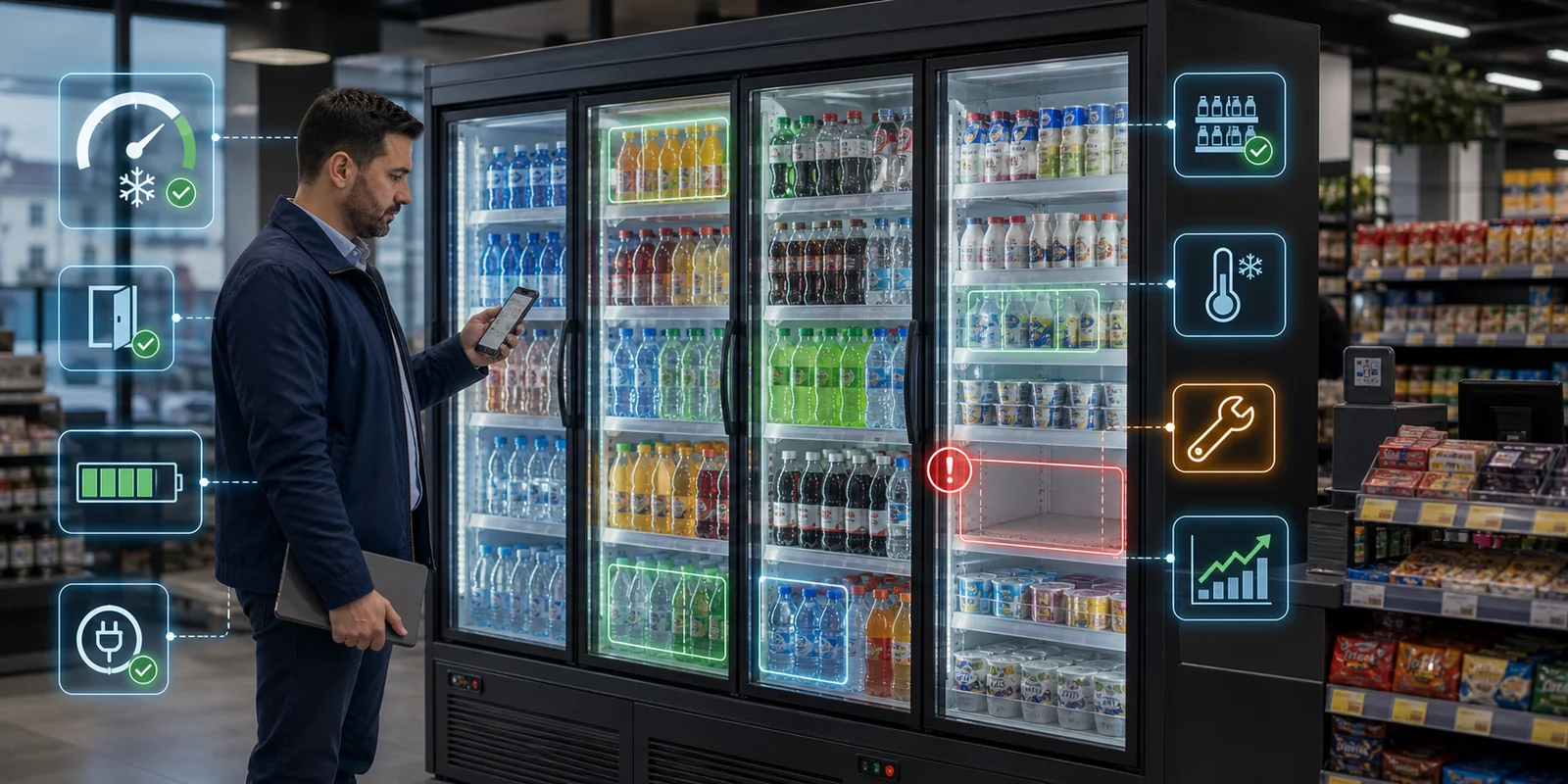
The cooler in the store looks like equipment.
In FMCG, it is much more.
It is a commercial asset, a point of sale, brand presence, impulse trigger and operational risk at the same time.
If the cooler is in the right place, working, filled and maintaining the right temperature, it can drive sales.
If it is empty, broken, switched off, hidden or occupied by a competitor, it turns investment into loss.
Cold equipment is a special type of asset
Coolers differ from regular displays and POS materials.
They have:
- technical condition;
- temperature;
- energy consumption;
- doors and openings;
- maintenance needs;
- product risk;
- direct connection to chilled availability;
- often higher investment value.
That is why Asset tracking is the foundation, but cold equipment needs additional KPIs.
First: where is the cooler
Location is the first control.
The team needs to know:
- which outlet it is in;
- which store zone it is in;
- whether it is visible;
- whether it is close to shopper flow;
- whether access is easy;
- whether it is in the agreed location;
- whether it was moved without approval.
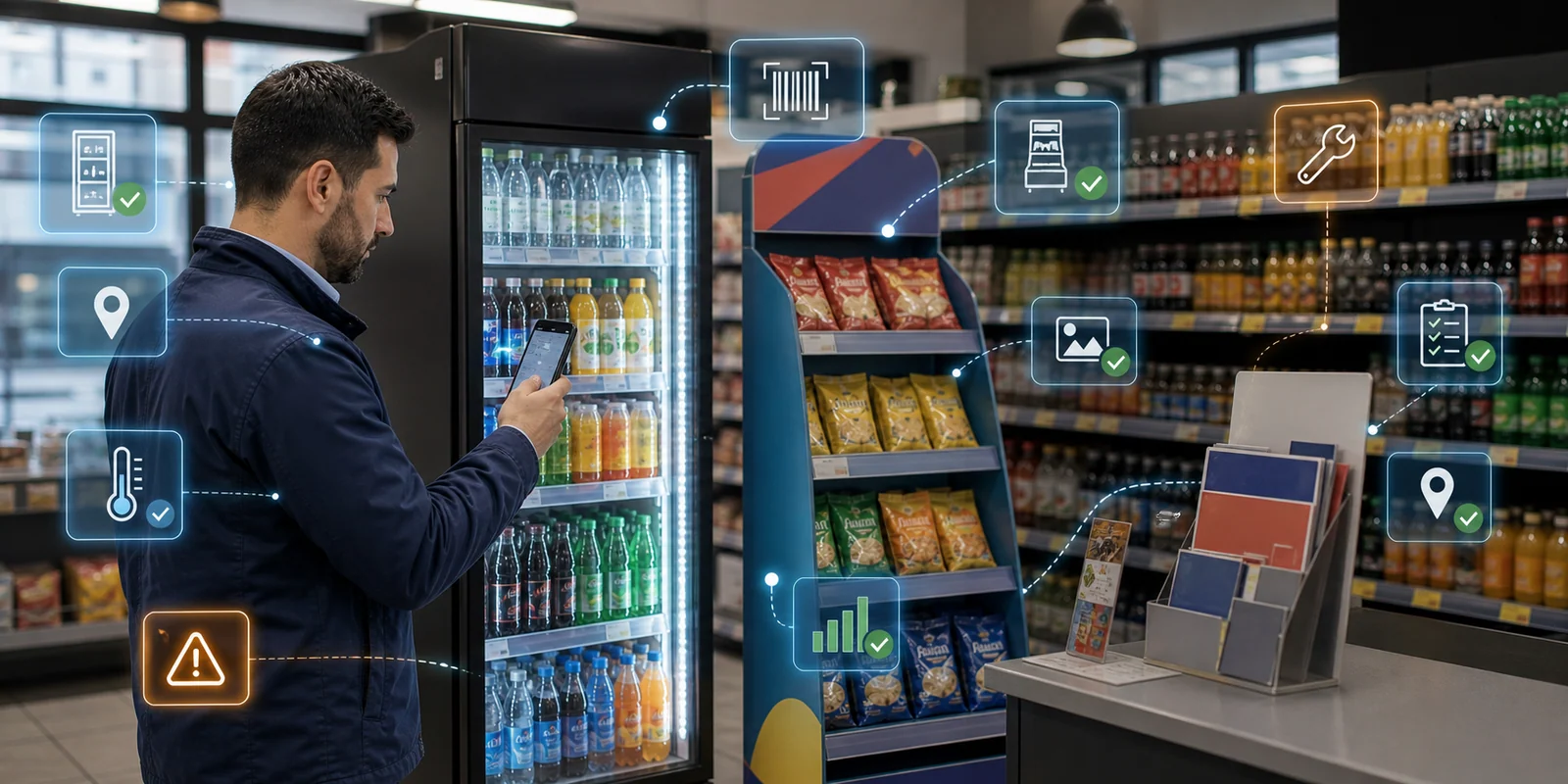
Asset Validator can connect asset ID, GPS, outlet and photo proof to provide real control.
A cooler may be present in the store but placed where almost nobody sees it. That is operationally present, but commercially weak.
Second: does it work
For a cooler, condition is not a cosmetic detail.
The system should track:
- is it switched on;
- does it maintain temperature;
- are lights working;
- does the door close properly;
- is there ice or condensation;
- is there noise or damage;
- is it clean;
- is there a service ticket.
If the cooler does not maintain the right temperature, product quality can suffer, the shopper may not buy and brand experience can decline.
Third: is it filled
A working cooler that is empty does not create sales.
Fill level should be measured:
- overall by cooler;
- by shelf;
- by SKU;
- by category block;
- versus plan;
- versus promo period;
- versus expected demand.
Image recognition can help verify whether products are present, whether there is an empty zone, whether a competitor occupies space and whether SKUs are correct.
Fourth: are the right products inside
A cooler can be full but filled with the wrong products.
This is especially important in beverages, dairy, impulse categories and promotion periods.
The team should check:
- agreed assortment;
- hero SKU;
- promo SKU;
- category split;
- competitor intrusion;
- blocked brand zone;
- price visibility;
- OOS on key products.
This connects cold equipment with the Perfect Store scorecard, instead of leaving it as a separate asset.
Maintenance workflow
A cooler problem should create action.
Not only a note.
Workflow should include:
- problem type;
- severity;
- owner;
- service team;
- target date;
- photo proof;
- parts/replacement need;
- closure evidence;
- repeated issue tracking.
Workflow orchestration is critical because a broken cooler can lose sales every day.
ROI of the cooler
A cooler has cost:
- purchase or lease;
- delivery;
- installation;
- maintenance;
- energy;
- visits;
- repair;
- replacement;
- opportunity cost.
The team should ask:
- is sell-out growing after installation;
- is OOS decreasing;
- is chilled availability improving;
- is basket value increasing;
- is route/maintenance cost justified;
- is execution better on key SKUs;
- should the cooler be moved.
Cost-to-serve matters because a high-maintenance asset may look commercially strong but economically weak.
KPIs for cold equipment
A good cooler dashboard should show:
| KPI | Why it matters |
|---|---|
| Cooler presence | whether the asset is physically in the store |
| Location compliance | whether it is in the right zone |
| Temperature OK | whether product quality is protected |
| Power/status OK | whether the equipment works |
| Fill level | whether product is available to sell |
| OOS by SKU | which key products are missing |
| Competitor intrusion | whether the agreement is violated |
| Maintenance issues | whether there is a technical problem |
| Time to repair | how fast it is restored |
| Sales uplift | whether the asset drives results |
These KPIs turn the cooler from equipment into a managed commercial asset.
In short
Cold equipment in FMCG should be managed as a sales asset.
It is not enough to know that the cooler was placed.
We need to know:
- where it is;
- whether it is visible;
- whether it works;
- whether it maintains temperature;
- whether it is filled;
- whether it contains the right products;
- whether there is an issue;
- whether it drives sales.
A cooler is a good asset only when it creates chilled availability and real sell-out.
Related in Optimasoft
- Asset Validator tracks location, status and photo proof for coolers and trade assets.
- Asset tracking places cold equipment in the wider trade asset context.
- Image recognition checks fill level, OOS, SKU and competitor intrusion.
- Workflow orchestration manages maintenance and execution issues.
- Perfect Store scorecard includes cooler execution as part of the retail standard.
- Cost-to-serve helps evaluate the economics of cold equipment.
Sources
Related articles