Asset tracking in FMCG: coolers, displays and POSM as measurable commercial assets
Trade assets should not be managed only as inventory. They need location, owner, condition, photo proof, compliance, sales impact and a clear action when something is wrong.
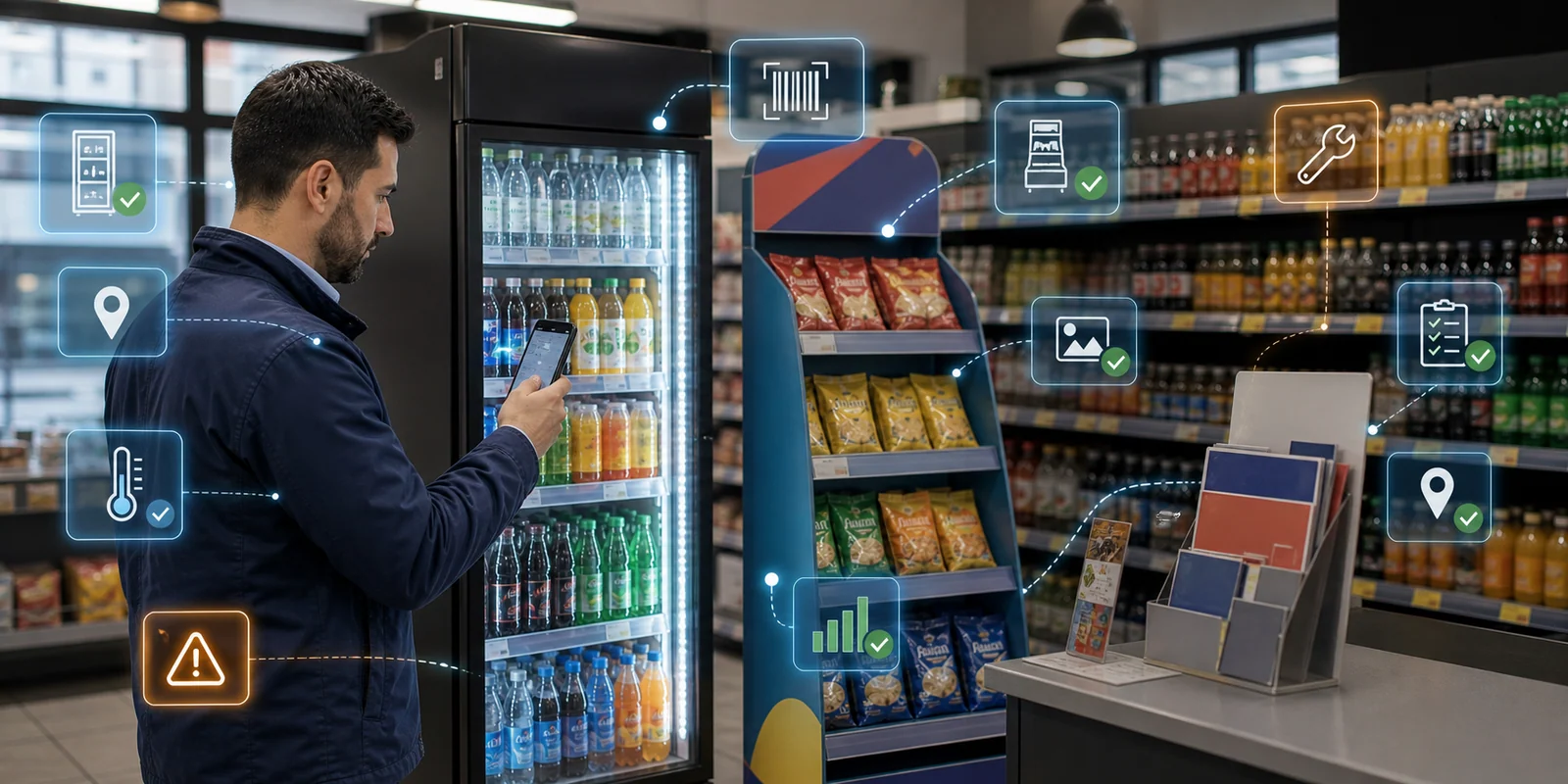
FMCG companies invest heavily in trade assets.
Coolers. Displays. Racks. Secondary placements. POS materials. Checkout stands. Branded equipment.
But these assets are often managed as “given to the customer”.
We gave a cooler. We gave a display. We gave a stand. We gave POSM.
The real question is different:
Where is the asset, does it work, is it used correctly and does it drive sales?
That is asset tracking in FMCG.
The asset is not just inventory
Financially, the asset may be inventory.
Commercially, the asset is an investment.
It should create:
- visibility;
- additional space;
- chilled availability;
- promotion impact;
- brand presence;
- impulse purchase;
- better Perfect Store score;
- higher sell-out.
If the asset is in the wrong location, empty, broken, hidden, used by a competitor or filled with the wrong products, the investment is not working.
What the asset register should contain
Good asset tracking starts with a clear asset register.
It should contain:
- asset type;
- unique ID;
- serial number, where relevant;
- owner;
- customer/outlet;
- GPS/location;
- installation date;
- contract terms;
- maintenance status;
- photo evidence;
- expected placement;
- expected SKU/category usage;
- last visit status;
- last compliance result;
- issue history.
Without this, the company is not managing assets. It only has a list.
Location: is the asset where it should be
The first control is simple: is the asset physically in the right store?
Even this is often a problem.
Assets get moved between outlets, remain in storage, are transferred to another customer, disappear or are used in a zone with little commercial value.
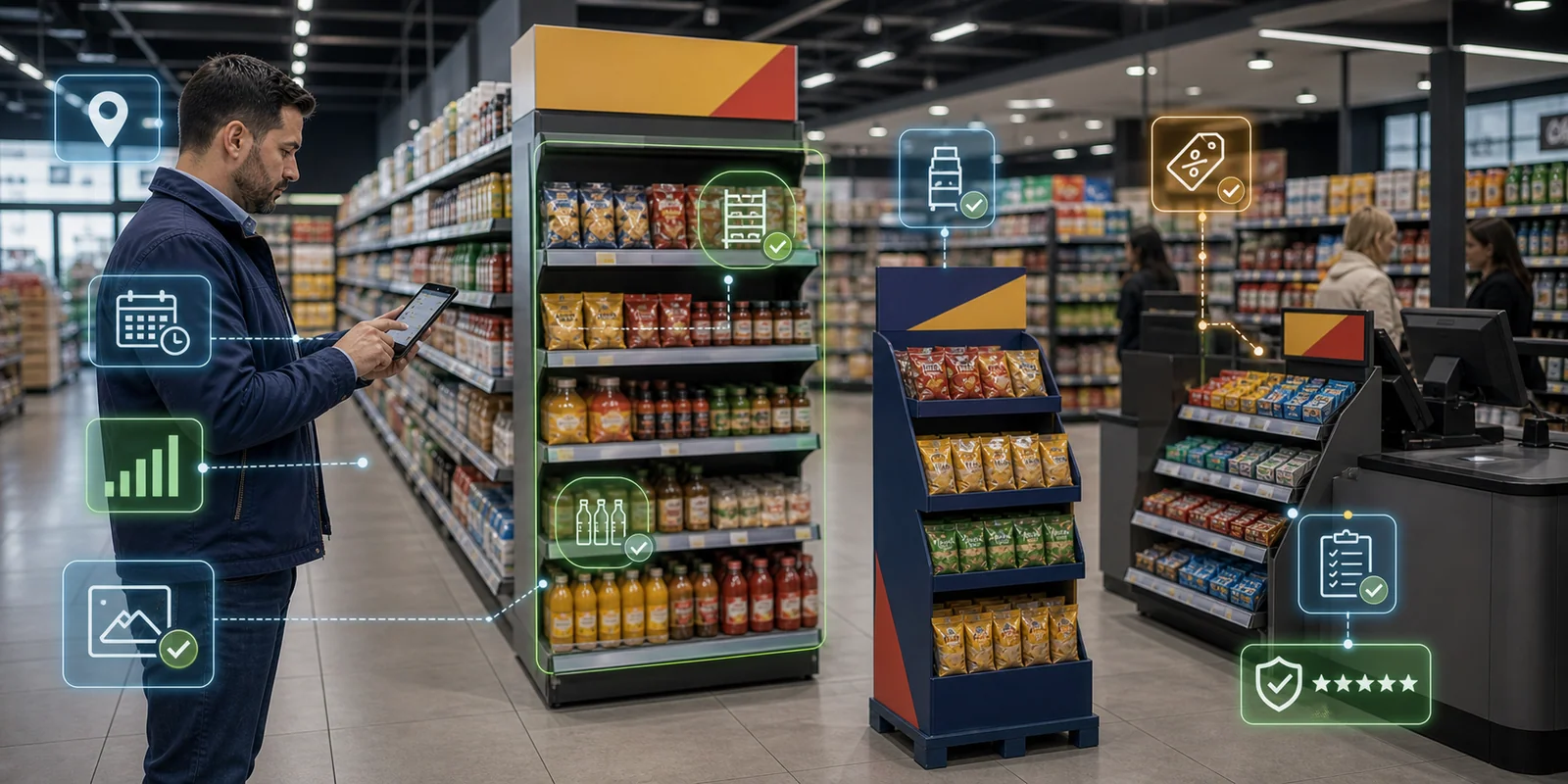
Asset Validator should check:
- asset present;
- correct outlet;
- correct zone;
- GPS match;
- current photo;
- change from previous visit.
Location without photo proof is weak control.
Photo proof without structured status is weak analysis.
Condition: does the asset work
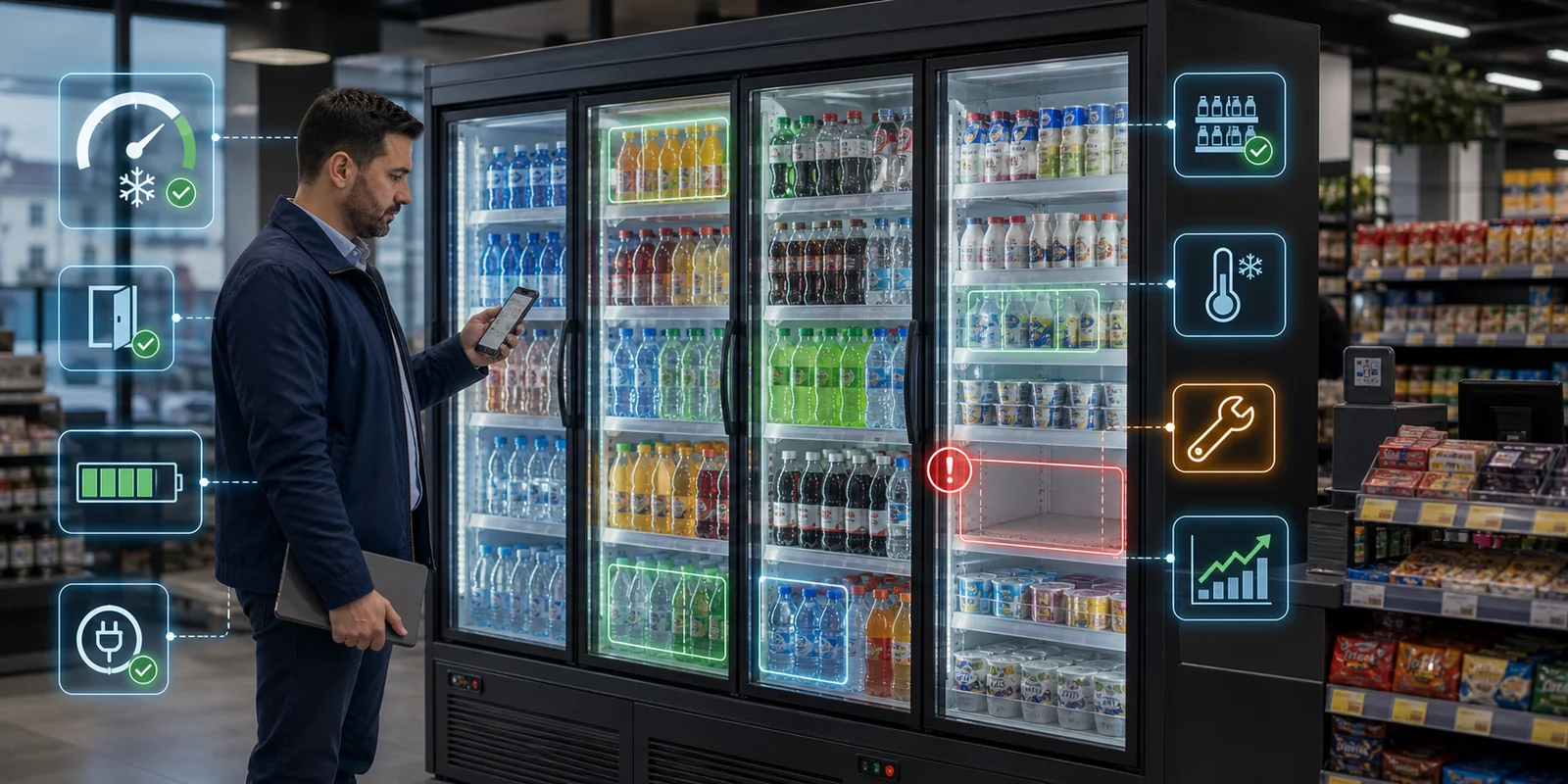
Condition is especially critical for coolers.
It is not enough for the cooler to be present.
We need to know:
- is it switched on;
- does it maintain the right temperature;
- is it clean;
- is it technically healthy;
- is lighting working;
- are there visible damages;
- is there a maintenance issue;
- is there product risk.
If a cooler is empty or broken, it is not an asset. It is a missed sale and potential brand damage.
Fill and compliance
The asset must be used as intended.
For example:
- the cooler should be filled with the right products;
- the display should contain the promo SKU;
- POSM should be visible;
- the stand should not be occupied by a competitor;
- checkout placement should be in the correct zone;
- secondary placement should be active during the promo period.
Image recognition can help check not only whether the asset exists, but whether it is executed correctly: product, facing, competitor intrusion, empty space, promo material.
Asset tracking and Perfect Store
Trade assets should be part of the Perfect Store scorecard.
But not as a checkbox saying “asset exists”.
It is better to measure:
- asset present;
- asset visible;
- asset filled;
- correct SKU/category;
- correct placement;
- condition OK;
- no competitor misuse;
- issue closed.
This makes the asset part of the retail execution standard.
Maintenance workflow
When the asset has a problem, there must be workflow.
Not just a photo.
The system should create an issue:
- what is the problem;
- who owns it;
- what is the due date;
- is a service technician needed;
- is replacement needed;
- is there a customer agreement issue;
- what proof closes the task.
Workflow orchestration matters because an asset problem without an owner remains only an observation.
ROI: does the asset drive sales
Asset tracking should not stop at compliance.
It should ask:
- is there uplift after installation;
- is sell-out growing;
- is OSA improving;
- is share of shelf stronger;
- is out-of-stock decreasing;
- is promo effectiveness higher;
- what is cost-to-serve;
- does the asset deserve its place.
If the asset is expensive but does not create results, it should be reallocated, removed or assigned a different service model.
Cost-to-serve matters because some assets require maintenance, logistics and visits that may consume margin.
KPIs for asset tracking
A good asset dashboard should show:
| KPI | Why it matters |
|---|---|
| Asset presence | whether the asset is physically in the store |
| Asset condition | whether it works and is in good condition |
| Fill level | whether it is being used |
| Correct product/category | whether execution is correct |
| Competitor misuse | whether agreement is being violated |
| Maintenance open issues | whether unresolved problems exist |
| Time to fix | how quickly issues are closed |
| Sales uplift | whether it drives results |
| Asset ROI | whether the investment is justified |
Without these KPIs, assets can easily become hidden trade spend.
In short
Asset tracking in FMCG is not only knowing where coolers and displays are.
It is control over commercial investment:
- location;
- ownership;
- condition;
- fill;
- compliance;
- photo proof;
- maintenance;
- workflow;
- ROI.
An asset matters only if it works in the store and helps sales.
Related in Optimasoft
- Asset Validator checks location, status and photo proof for trade assets.
- Image recognition recognizes whether the asset is filled and executed correctly.
- OptimaSale connects asset checks with the field sales visit.
- Workflow orchestration creates issue, owner and closure process when there is a problem.
- Perfect Store scorecard includes asset execution as part of the retail standard.
- Cost-to-serve helps evaluate whether the asset investment makes economic sense.
Sources
Related articles