How to measure ROI from AI in FMCG field sales
ROI from AI is not proven by a demo. It is proven with baseline, adoption, control group and clear impact metrics: OSA recovery, order quality, route productivity, issue closure and admin time saved.
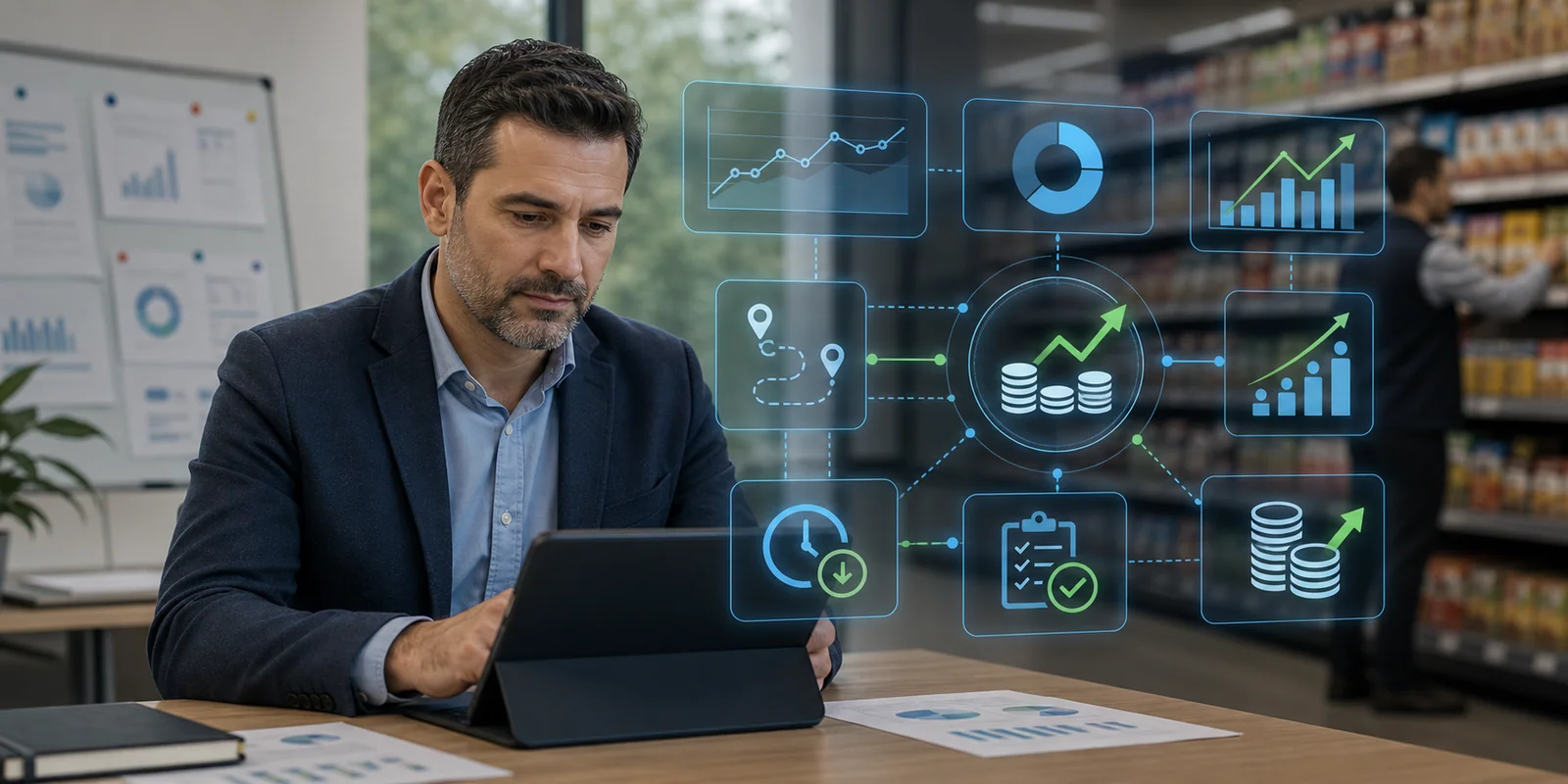
An AI demo can look impressive.
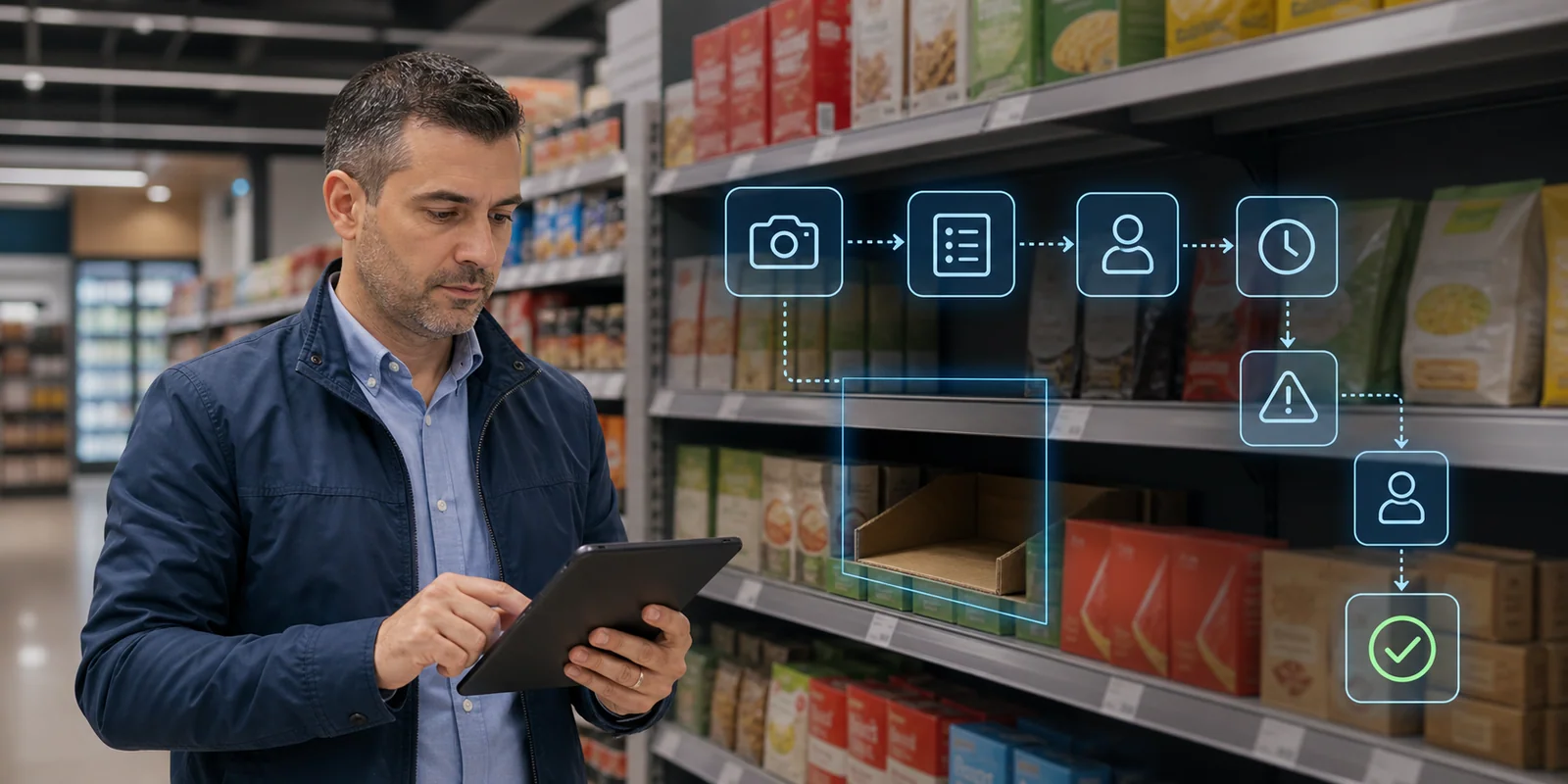
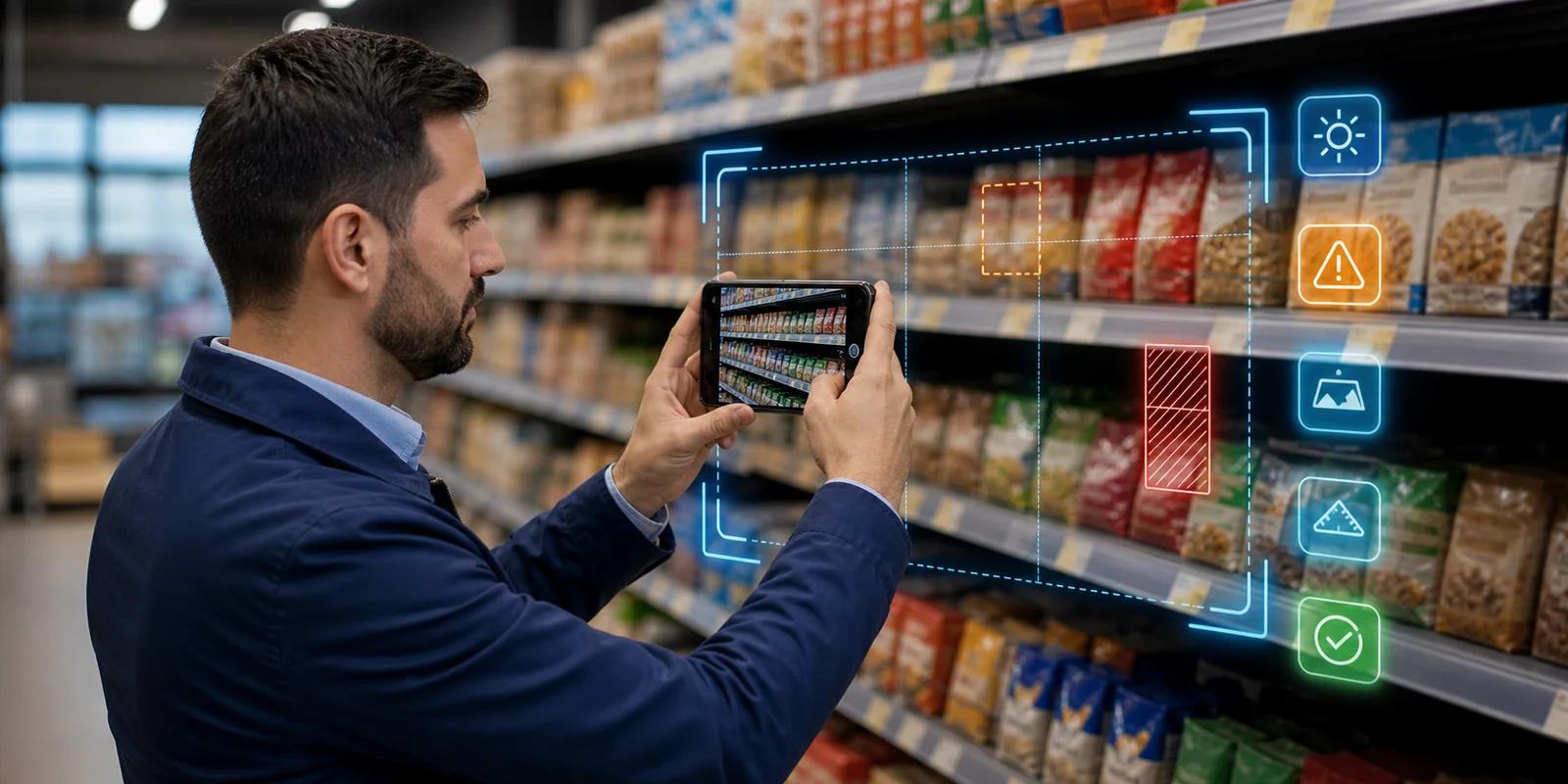
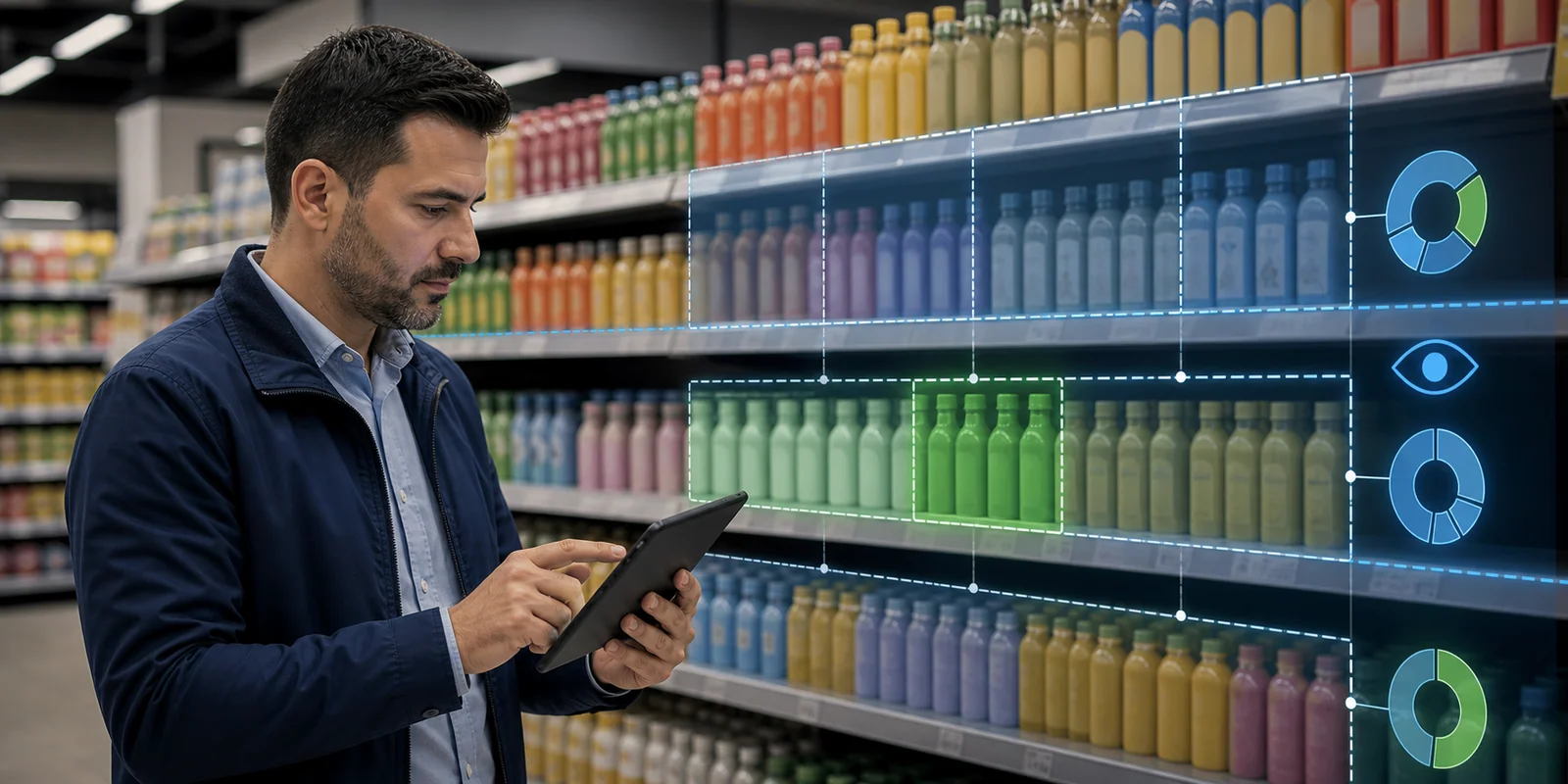
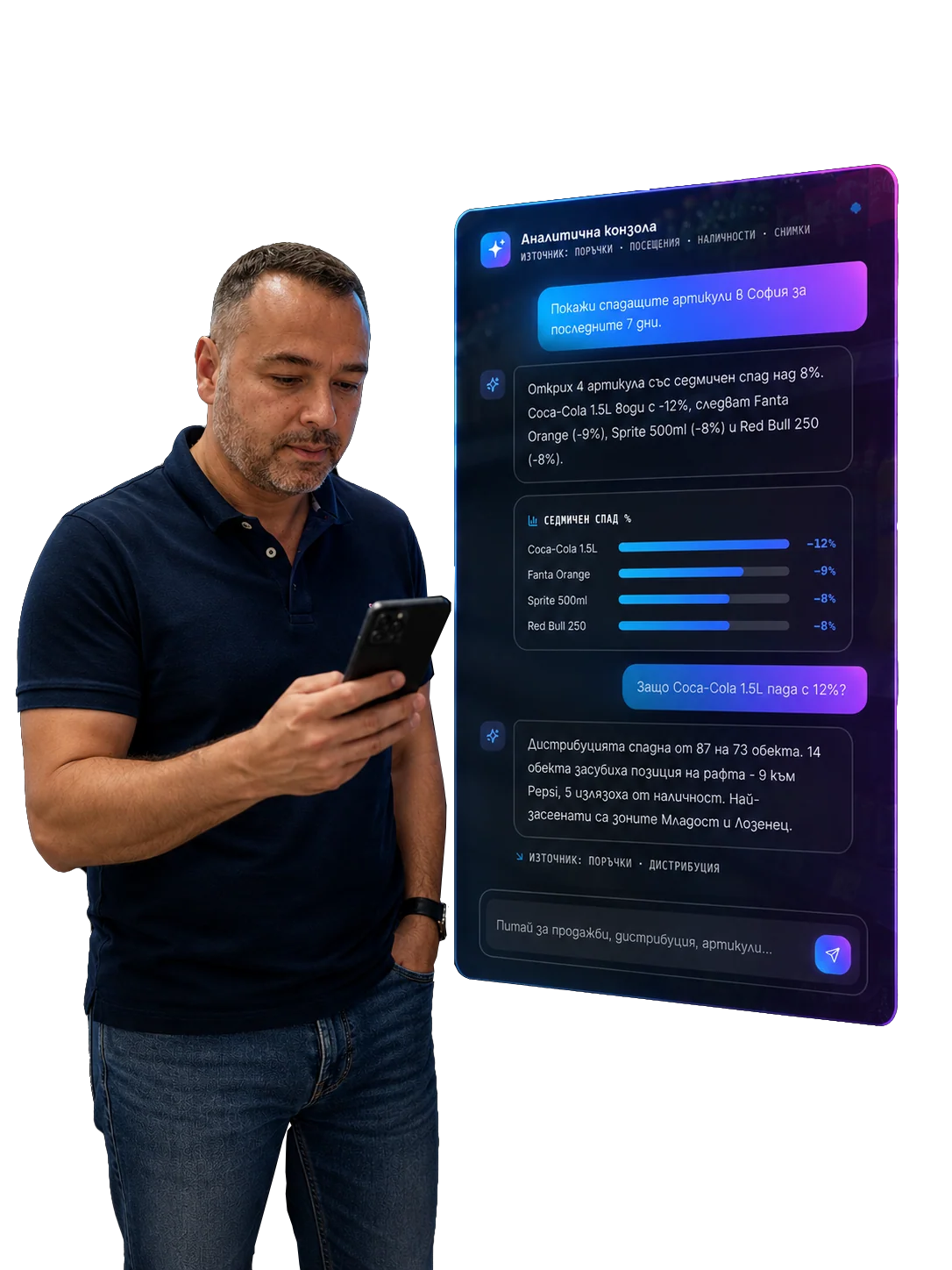
A shelf photo becomes data. The system recommends an order. The route is reprioritized. Chat BI answers a question. An agent creates follow-up.
But the management question is different:
How do we prove this creates money or reduces risk?
ROI from AI in FMCG field sales should not be measured only by "how much time we saved". That is part of the picture, but not the whole picture.
The real ROI comes from:
- recovered sales;
- less out-of-stock;
- better orders;
- better promo execution;
- better route productivity;
- faster issue closure;
- less admin;
- better coaching;
- lower cost-to-serve.
Start with baseline
Before an AI pilot, there must be baseline.
Without baseline, every improvement is an impression.
Minimum baseline:
- OSA by priority SKU;
- Perfect Store score;
- promo compliance;
- recommended order acceptance, if recommendations already exist;
- average order value;
- OOS incidents;
- issue closure rate;
- time to close;
- visits per day;
- sales per visit;
- route kilometers/time;
- admin time;
- customer refusal reasons.
If we do not know the starting point, we cannot honestly say AI improved it.
Choose the right use case
Not every AI use case has the same ROI.
Good first use cases:
- Image recognition for OSA and promo compliance;
- AI Order Brain for recommended orders;
- Route optimization for field productivity;
- Workflow orchestration for issue closure;
- Sales coaching for behavior improvement.
It is better to measure one use case well than five use cases superficially.
Use a control group
If possible, the pilot should have a control group.
For example:
- region with AI vs region without AI;
- category with AI recommended order vs category without;
- outlet group with image recognition vs similar outlets without;
- representatives with coaching signals vs control group.
Without a control group, it is hard to separate AI effect from seasonality, promotion, pricing, supply or market movement.
Measure adoption
AI that is not used has no ROI.
Adoption metrics:
- how often representatives open the assistant;
- how many shelf scans are valid;
- how many recommendations are accepted;
- how many overrides have reason code;
- how many AI-generated tasks are closed;
- how many manager questions go through Chat BI;
- how many coaching suggestions are applied.
Adoption is not only login. Adoption is whether AI enters the real workflow.
Measure impact, not only activity
Weak ROI report:
- 10,000 photos uploaded;
- 5,000 recommendations generated;
- 2,000 tasks created;
- 300 Chat BI questions.
Strong ROI report:
- OSA recovery improved;
- recommended order acceptance reduced OOS;
- issue closure time fell;
- promo compliance increased;
- route productivity improved;
- admin time decreased;
- sales per visit increased;
- cost-to-serve improved.
Retail Execution KPI should be the foundation of the ROI model.
ROI levers
1. Recovered sales
If AI detects an OSA problem and it is closed, part of the missed sale can be recovered.
This is one of the strongest ROI levers.
2. Order quality
Better recommended order can reduce:
- under-order;
- overstock;
- OOS;
- unnecessary deliveries;
- refusals without reason.
3. Route productivity
A better route can increase:
- visits to high-impact outlets;
- sales per visit;
- issue closure;
- promo checks on time.
And reduce:
- kilometers;
- empty visits;
- missed critical visits.
4. Admin time
AI agents and workflow can reduce:
- writing summaries;
- manual task creation;
- searching information;
- reminders;
- manual reporting.
But admin saving alone is rarely the largest ROI. The largest ROI appears if that time returns to better visits.
5. Faster closure
If issues close faster, risk stays in the outlet for less time.
This affects OSA, promo compliance and visibility.
Cost model
ROI should include costs:
- software;
- integrations;
- training;
- data quality work;
- device/camera process;
- field process change;
- monitoring;
- support;
- governance.
AI is not only license. AI is a change in operating model.
A practical ROI formula
Simplified:
ROI = (Recovered sales + productivity gains + cost savings + risk reduction - AI program cost) / AI program cost
But each part needs careful definition.
Recovered sales should not be invented. It should be estimated through baseline, control group and specific action closures.
In short
ROI from AI in FMCG field sales is proven with discipline.
You need:
- baseline;
- clear use case;
- control group;
- adoption metrics;
- impact metrics;
- cost model;
- governance;
- periodic review.
AI should not be evaluated by how "smart" it looks.
It should be evaluated by whether it improves store execution and reduces missed sales.
Related in Optimasoft
- Optimasoft AI Suite shows which AI loops can participate in the ROI model.
- Retail Execution KPI is the foundation for measuring impact.
- Image recognition, AI Order Brain, Route optimization, Workflow orchestration and Sales coaching are the main ROI levers in field sales.
- AI governance helps ROI stay sustainable, not chaotic.
Sources
- McKinsey - The State of AI: Global Survey 2025
- Bain & Company - Perfecting Sales Execution
- Bain & Company - Perfect Store: How advanced analytics is transforming sales execution
- NielsenIQ - Can the FMCG industry afford to lose billions from empty shelves?
- Gartner - Outcome-focused workflow and agentic execution, 2026
Related articles