AI governance for FMCG: how to deploy agents without chaos
AI governance is not a document for lawyers. In FMCG it is a practical system for defining which AI can act, with what data, under which rules, with which owner and how the result is proven.

AI governance often sounds like a heavy corporate topic.
Policies. Risk categories. Data access. Approvals. Regulation. Audit. Compliance.
But in FMCG, governance has very practical meaning:
How do we use AI in real commercial processes without creating chaos?
When AI starts recommending orders, creating tasks, escalating problems, preparing manager briefs and influencing routes, it is no longer enough to say "the model works".
The business needs to know:
- which AI use case exists;
- what data it uses;
- what it can do;
- when it waits for a human;
- who is responsible;
- what is logged;
- how quality is monitored;
- when it is stopped.
That is AI governance.
Governance does not start from regulation
Regulation matters. EU AI Act makes transparency, control and traceability even more important.
But governance should not start from fear.
It should start from operational clarity.
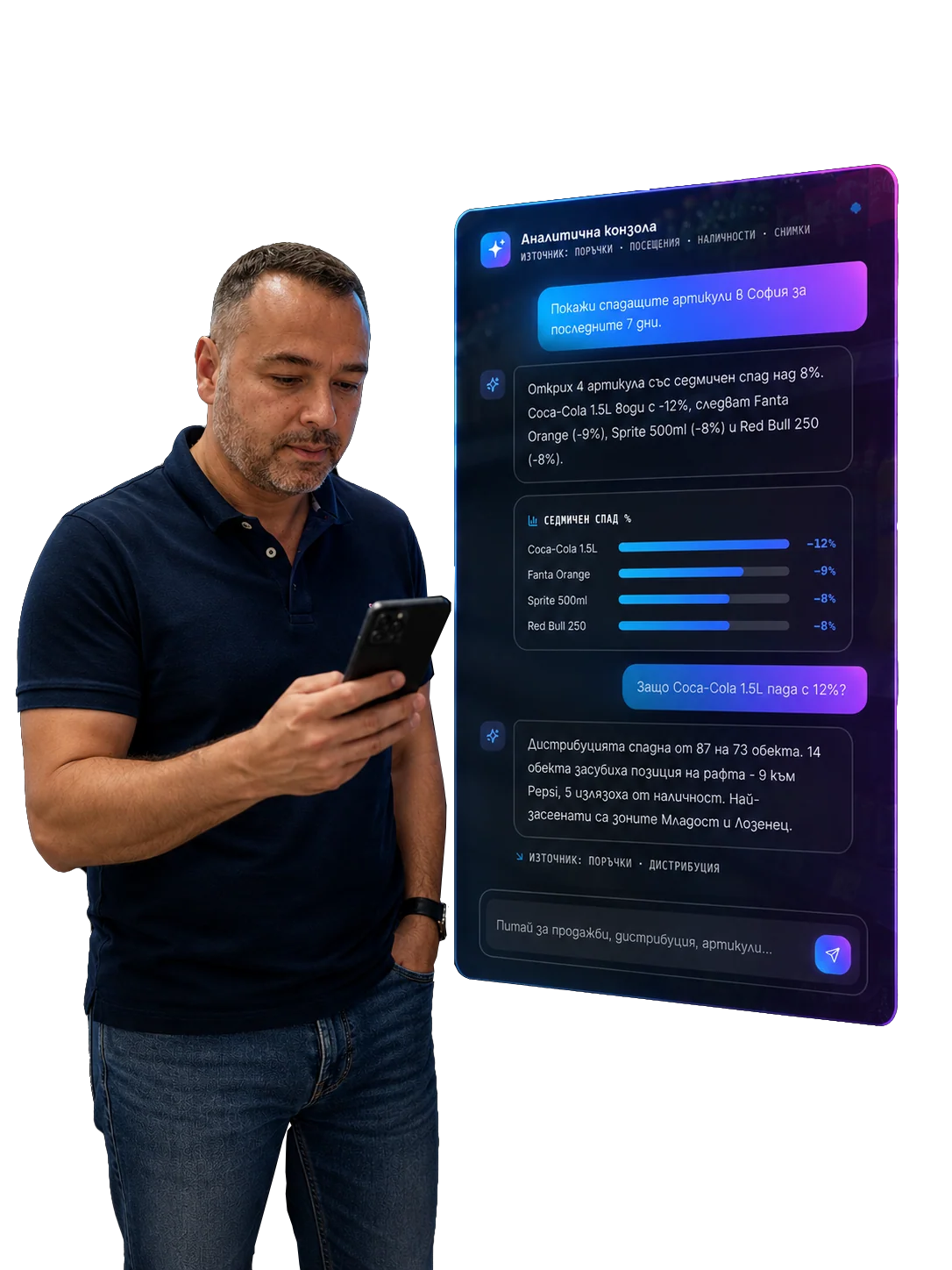
If an AI agent creates follow-up tasks, who sees them? If AI Order Brain recommends quantity, who can override it? If Chat BI gives an answer, which KPI definition does it use? If image recognition is uncertain, who reviews the result?
These are daily questions, not only compliance questions.
First: inventory of AI use cases
You cannot govern AI that is not described.
The first step is a simple inventory:
| Use case | Data | Action | Risk | Owner |
|---|---|---|---|---|
| Recommended order | orders, OSA, promotions | suggests quantity | medium | sales operations |
| Shelf recognition | images, product master | detects OSA/facings | medium | retail execution |
| AI agent follow-up | issues, tasks | creates task | low/medium | operations |
| Chat BI | KPI, visits, orders | answers questions | medium | BI/commercial |
| Route priority | outlets, risk, routes | suggests route | medium | sales ops |
This is not bureaucracy. It is a map of AI reality.
Second: risk levels
Not all AI use cases have the same risk.
A practical classification:
Low risk
- reminder;
- summary;
- grouping issues;
- draft brief;
- missing evidence alert.
More automation is acceptable here.
Medium risk
- recommended order;
- route priority;
- issue owner suggestion;
- coaching recommendation;
- customer follow-up suggestion.
These need reason, override and monitoring.
High risk
- customer commitment;
- credit-related decision;
- automatic order change;
- closing critical issue without evidence;
- contractual escalation.
These need human approval.
Third: data governance
AI in FMCG uses sensitive data:
- customer history;
- prices;
- trade terms;
- store images;
- GPS;
- orders;
- credit status;
- representative performance;
- competitor signals.
So the business needs:
- role-based access;
- data minimization;
- retention rules;
- image privacy rules;
- separation between raw image and business signal;
- control over who sees performance insights;
- access audit.
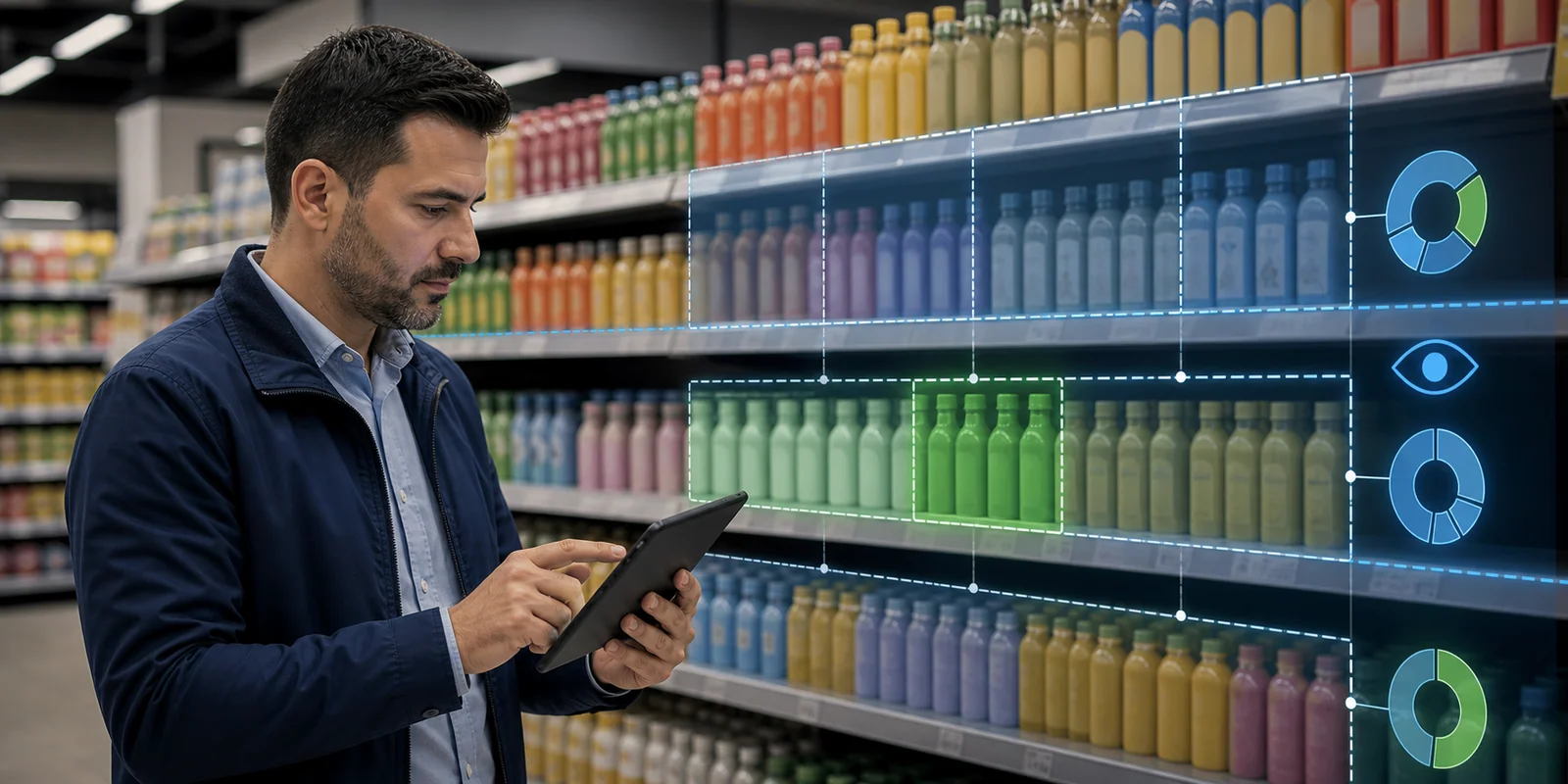
Image recognition, for example, is not only a computer vision topic. It is also a data governance topic.
Fourth: approval gates
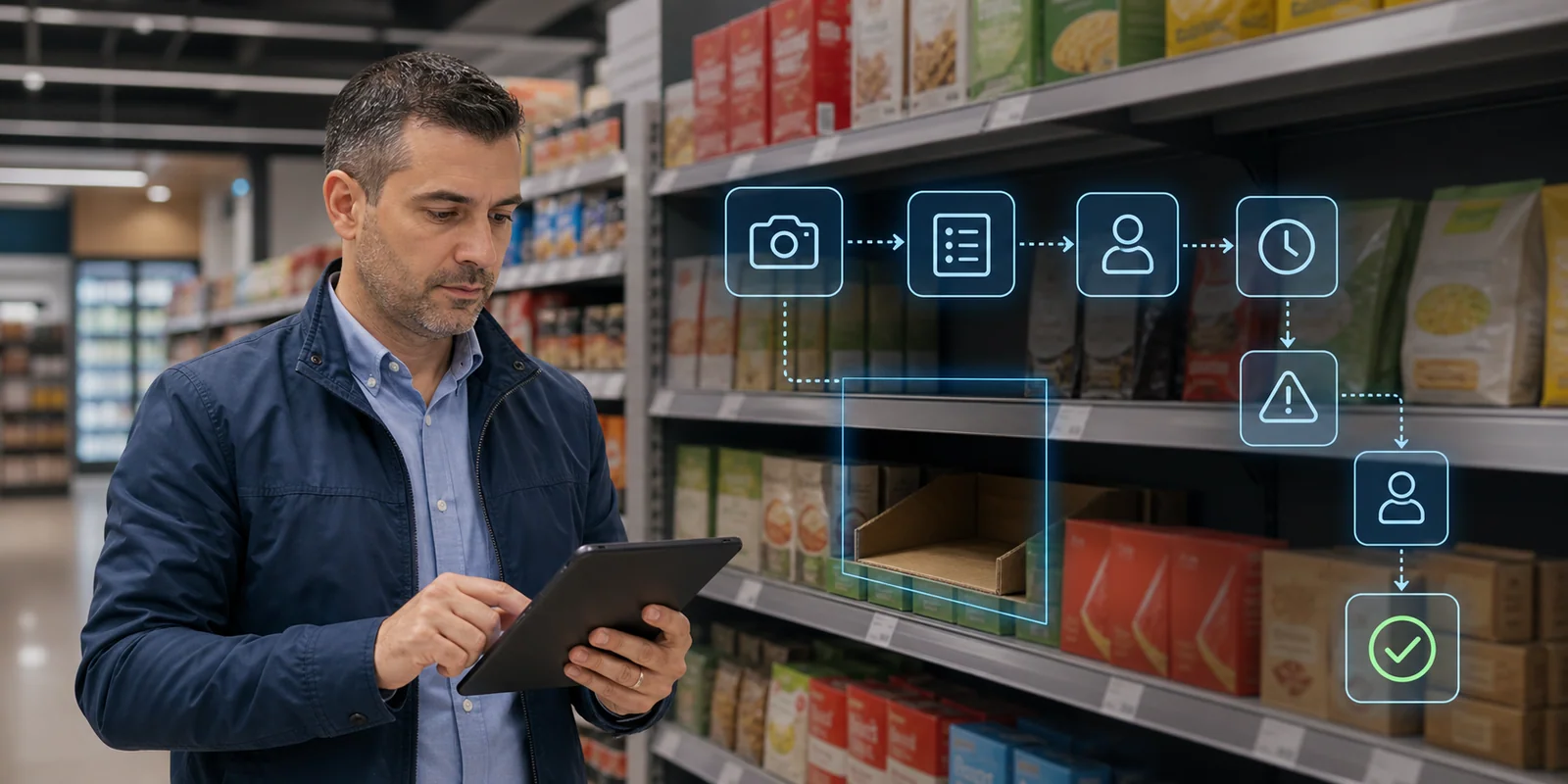
Approval gates define when AI can act alone and when it waits for a human.
Example:
- AI can create low-risk follow-up;
- AI can suggest owner;
- AI can prepare escalation;
- AI cannot close critical issue without evidence;
- AI cannot change order without a human;
- AI cannot take customer commitment.
Human-in-the-loop AI is not a bottleneck. It is a trust model.
Fifth: monitoring
AI governance is not a one-time project.
The business should monitor:
- accuracy;
- acceptance rate;
- override rate;
- reason code quality;
- drift;
- SLA impact;
- issue closure impact;
- complaints;
- bias by region, representative or channel;
- agent actions;
- exceptions.
If an AI recommendation is accepted but the result does not improve, there is a problem. If an agent creates many tasks but closure does not rise, there is noise. If Chat BI gives answers without confidence, there is trust risk.
Sixth: owner
An AI use case without owner is risk.
The owner is not simply "IT".
It can be:
- sales operations;
- commercial excellence;
- retail execution;
- trade marketing;
- BI;
- legal/compliance;
- data team;
- regional management.
IT can support the system. But the business owner should own the rules, quality and result.
Agent sprawl
When every department creates an agent, agent sprawl appears quickly:
- many agents;
- different rules;
- duplicated actions;
- unclear owners;
- conflicting recommendations;
- too much noise;
- weak audit.
That is why AI agents need a registry:
- what the agent does;
- who owns it;
- what data it uses;
- what rights it has;
- what limits it has;
- when it is reviewed;
- how it is disabled.
In short
AI governance in FMCG is not an obstacle to AI.
It is how AI becomes safe and scalable.
A good frame includes:
- inventory of use cases;
- risk levels;
- data access rules;
- approval gates;
- human-in-the-loop;
- audit trail;
- monitoring;
- owner;
- agent registry;
- periodic review.
Without governance, AI can create chaos.
With governance, AI becomes part of real retail execution management.
Related in Optimasoft
- AI agents should work with roles, permissions, owner and audit trail.
- Workflow orchestration defines rules and approval gates for actions.
- Human-in-the-loop AI explains why control creates trust.
- EU AI Act and your business software covers the regulatory context.
- Optimasoft AI Suite shows where governance enters the full architecture.
Sources
Related articles