How to choose an SFA platform for FMCG in 2026
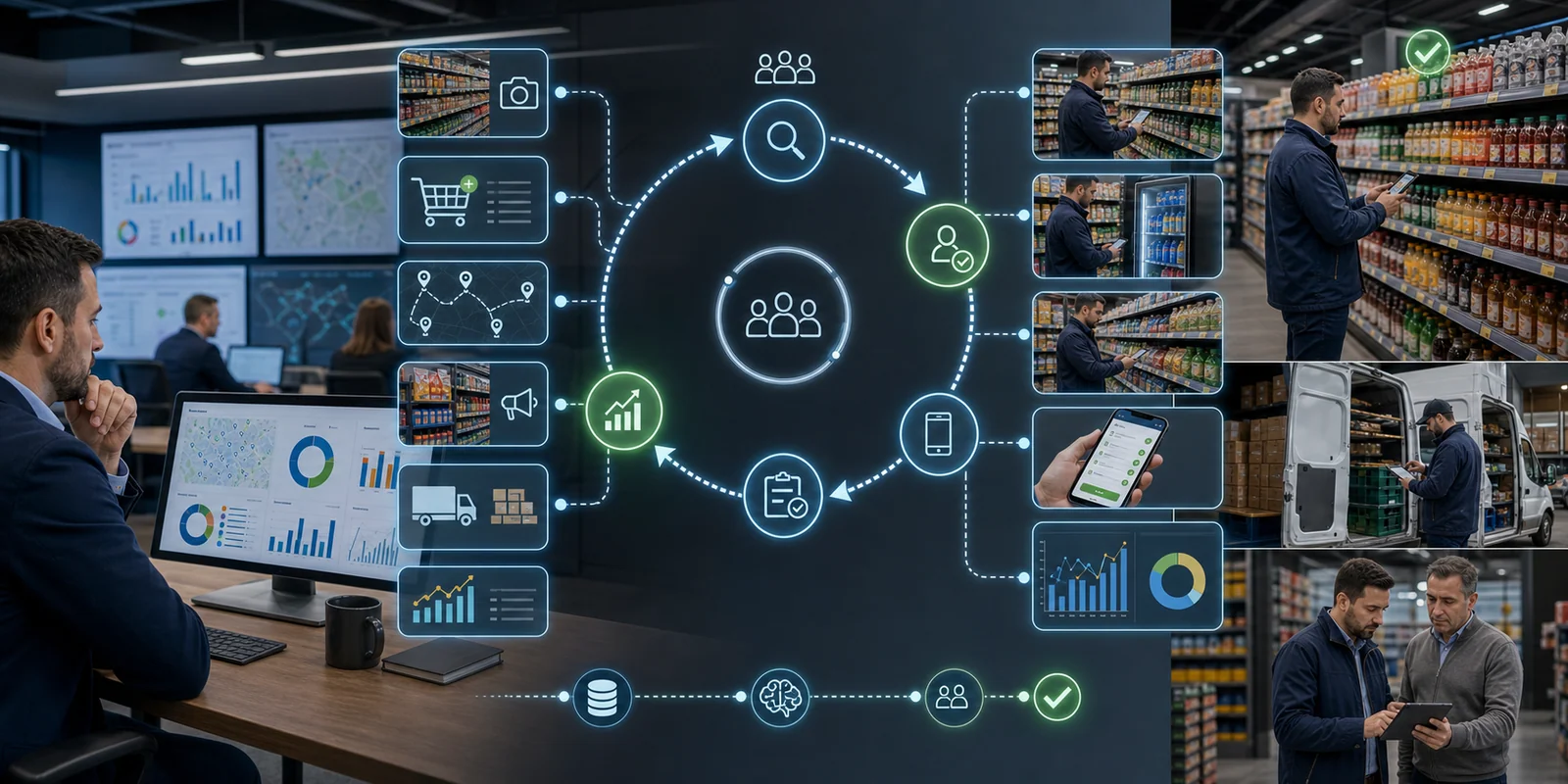
SFA in 2026 should not be only a mobile form for visits and orders. A good platform must manage route execution, orders, image recognition, AI recommendations, DMS integration, offline work and adoption.
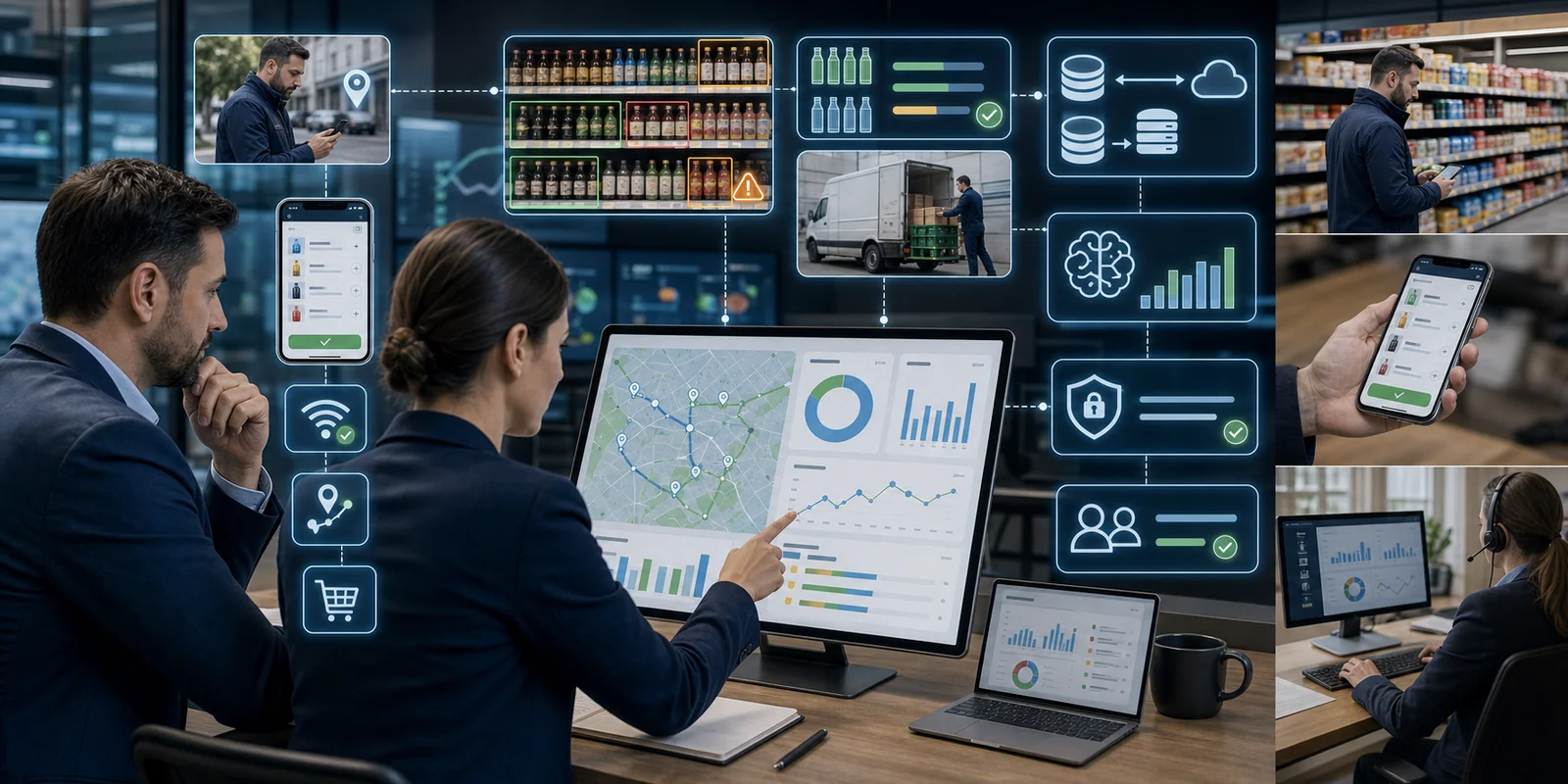
Choosing an SFA platform for FMCG in 2026 no longer means simply giving sales reps a mobile app.
The market has changed.
Field sales teams need to do more than visits and orders. They need to manage retail execution, promotions, photos, shelf gaps, recommended orders, routes, assets, claims, distributor visibility and AI signals.
A good SFA platform is no longer a “mobile CRM”.
It is an execution layer.
First question: what problem are you solving
Before demo and feature lists, the business problem should be clear.
For example:
- sales reps do not execute routes;
- visits are many, but quality is weak;
- orders are manual and inaccurate;
- OOS is seen too late;
- promotions are not executed;
- supervisors have poor visibility;
- DMS/ERP data is delayed;
- field team does not use the system;
- management does not trust the reports.
If the problem is not clear, selection becomes a comparison of UI screens.
That is a weak way to choose a critical platform.
Offline mobile is not optional
FMCG field sales works in real conditions:
- weak internet;
- small stores;
- warehouses;
- cold zones;
- rural routes;
- fast visits;
- many photos;
- many SKUs.
SFA should work offline-first:
- visit plan;
- customer data;
- price list;
- assortment;
- order taking;
- task checklist;
- photo capture;
- payments/collections, where relevant;
- synchronization without data loss.
If offline mode is weak, adoption will suffer no matter how beautiful the interface is.
Route and visit execution
A good SFA should manage more than a customer list.
It should manage:
- route plan;
- visit frequency;
- visit priority;
- missed visits;
- ad hoc visits;
- time in store;
- task completion;
- GPS/geofencing when needed;
- supervisor review;
- issue follow-up.
Field sales visit planning and Route optimization are key, because SFA without route discipline often becomes only a reporting app.
Order taking and recommended order
Order taking should be fast, but also intelligent.
In 2026, SFA should support:
- customer-specific assortment;
- price list and promotions;
- minimum order rules;
- out-of-stock prevention;
- suggested/recommended order;
- line-level corrections;
- reason codes;
- order history;
- stock and delivery constraints.
AI Order Brain matters because recommended order reduces manual work and helps the sales rep avoid missing SKUs. But the system must allow human correction and measure recommended order acceptance rate.
100% automated order is not the goal. The better goal is a good recommendation plus control.
Retail execution and image recognition
SFA without retail execution is incomplete for FMCG.
It should manage:
- shelf checks;
- planogram compliance;
- share of shelf;
- price compliance;
- promo compliance;
- secondary placements;
- asset checks;
- photo proof;
- issue creation.
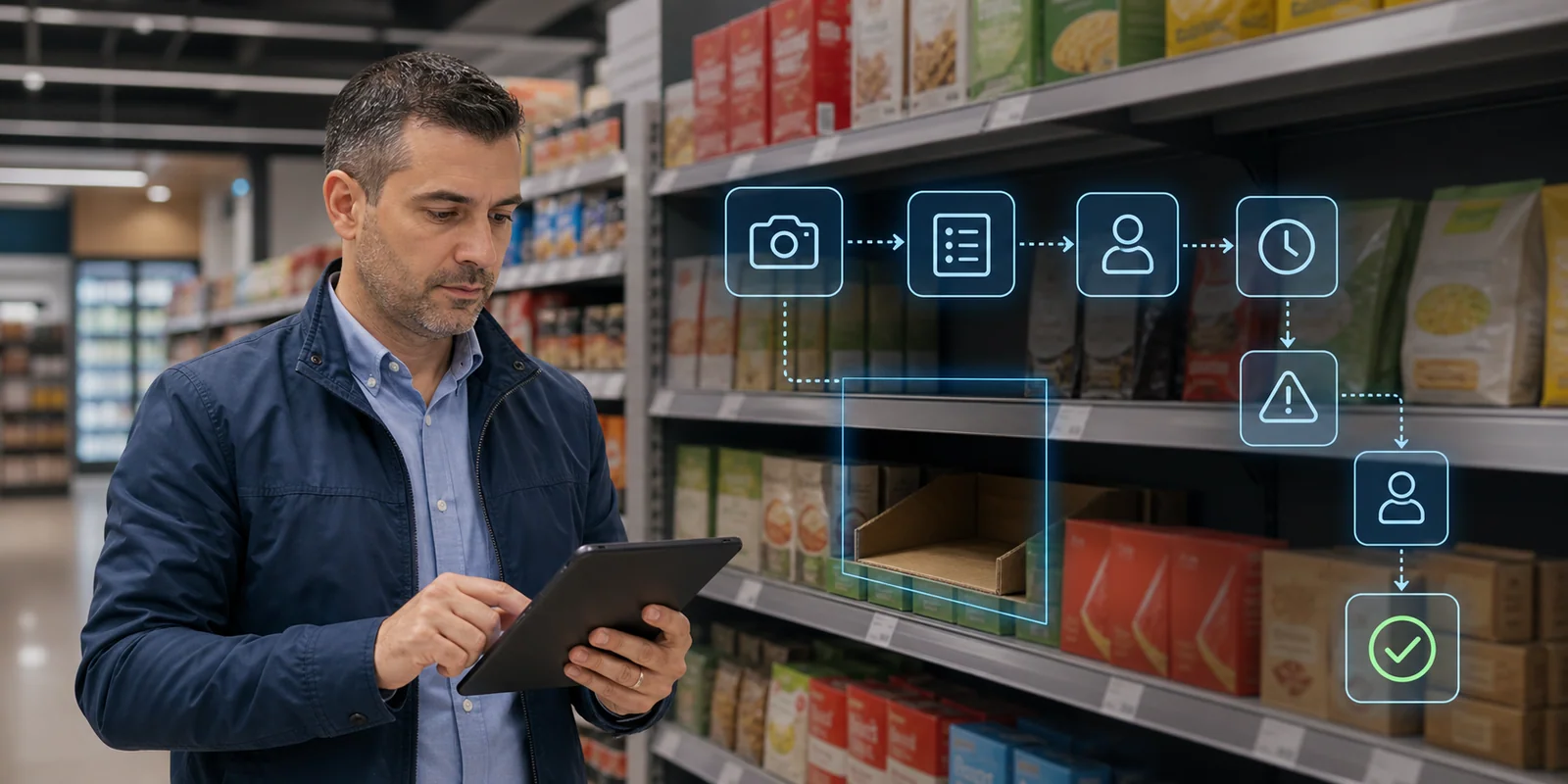
Image recognition is already a serious differentiator, but it must connect with action. If the system only returns a photo with boxes, value is limited.
A good SFA turns the photo into:
- structured signal;
- confidence;
- issue;
- next-best-action;
- supervisor visibility;
- learning data.
Integration with DMS and ERP
FMCG SFA cannot live separately.
It must integrate with:
- ERP;
- DMS;
- price lists;
- product master;
- customer master;
- inventory;
- invoices;
- payments;
- delivery status;
- claims.
DMS for FMCG is especially important because field sales cannot create good orders without stock, delivery status and customer constraints.
Red flag: if the vendor presents Excel export as the main integration approach, this is not enterprise execution architecture.
AI: look for usefulness, not buzzwords
AI in SFA should solve specific tasks:
- recommended order;
- OOS risk;
- next-best-visit;
- route priority;
- anomaly detection;
- sales coaching;
- image recognition;
- Chat BI;
- issue prioritization.
The question is not “does it have AI”.
The question is:
- what data does it use;
- how does it explain the recommendation;
- when can the human correct it;
- how is acceptance measured;
- what happens at low confidence;
- is there governance.
Human-in-the-loop AI is a key principle. AI should help the sales rep, not create a black box.
Security, roles and compliance
SFA works with sensitive data:
- customer data;
- prices;
- discounts;
- contracts;
- invoices;
- GPS/visit data;
- photos;
- user performance;
- AI decisions.
It needs:
- role-based access;
- audit trail;
- secure authentication;
- data retention rules;
- consent/privacy handling;
- environment separation;
- logging;
- governance of AI decisions.
With AI functionality, it is also important to consider the EU AI Act, especially if the system starts affecting performance evaluation, automated decisions or sensitive profiling.
Adoption is the deciding factor
The best SFA is useless if sales reps avoid it.
Adoption depends on:
- speed;
- offline reliability;
- simple order flow;
- few unnecessary clicks;
- clear tasks;
- visible benefit for the rep;
- good supervisor logic;
- training;
- support;
- correct KPIs.
Do not buy only a management dashboard. You are buying a daily tool for the field team.
What to check in the demo
Do not watch only a presentation.
Give a real scenario:
- The rep starts the day offline.
- Sees route and priorities.
- Visits a customer.
- Captures a shelf photo.
- Receives an issue.
- Takes a recommended order.
- Adjusts one line with reason code.
- Checks promo price.
- Creates a follow-up task.
- Synchronizes data.
- Supervisor sees the result.
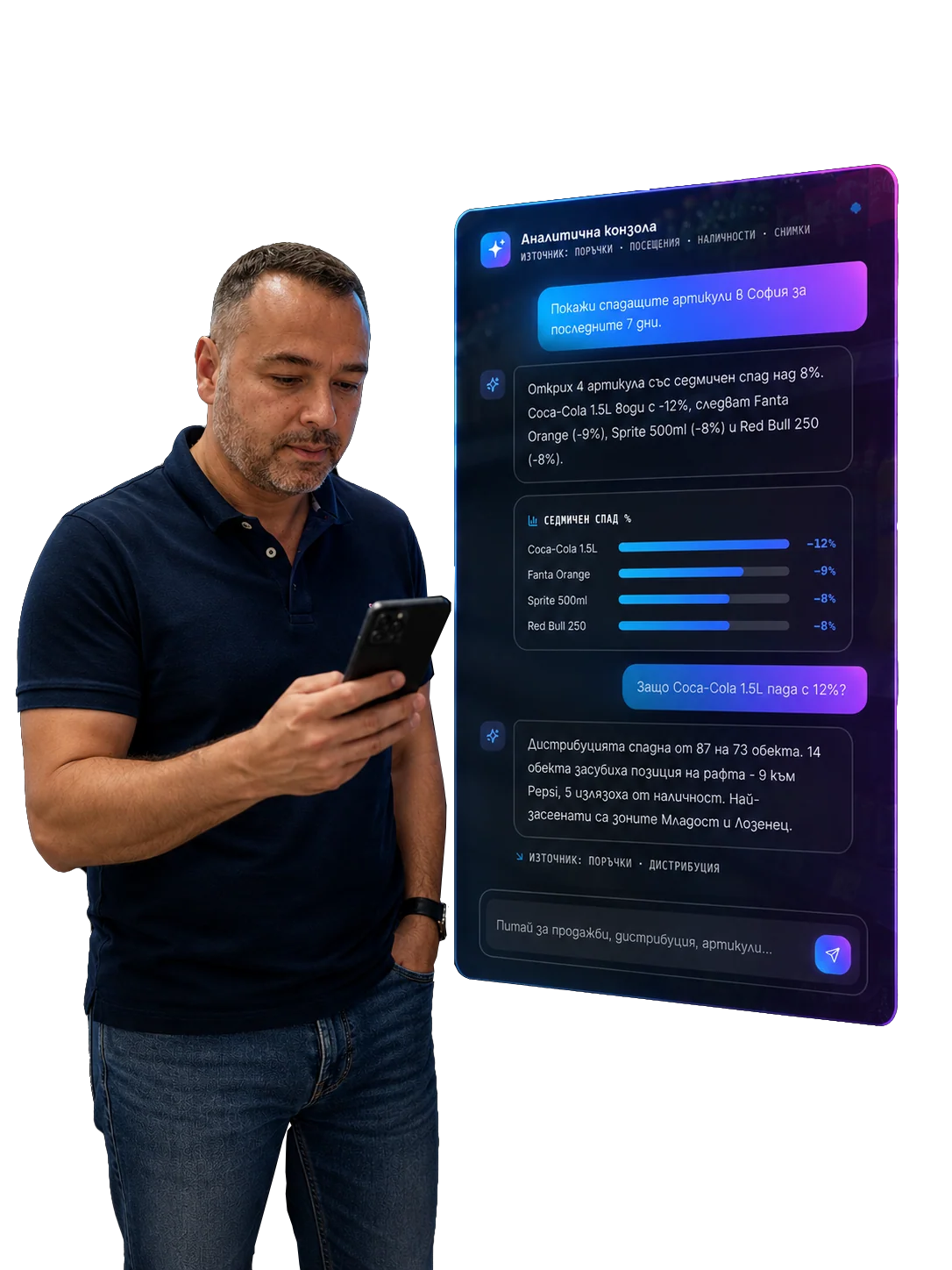
- Manager asks Chat BI for deviations.
If the demo cannot go through a real field workflow, the platform is probably weaker than it looks.
Red flags
Watch for:
- CRM-only logic without FMCG processes;
- weak offline mode;
- no real DMS/ERP integration;
- image recognition without action workflow;
- AI without explainability;
- no reason codes;
- no role governance;
- weak mobile performance;
- overly complex UI;
- lack of local support;
- inability to work by channel/route/segment logic.
In short
An FMCG SFA platform in 2026 should be an execution system.
It should connect:
- field sales;
- route planning;
- order taking;
- recommended orders;
- retail execution;
- image recognition;
- DMS/ERP data;
- supervisor visibility;
- AI and BI;
- security and governance;
- adoption.
Selection should not start with “which system has more features”.
It should start with “which system will improve execution in the real store”.
Related in Optimasoft
- OptimaSale is the SFA layer for field sales, visits, tasks and orders.
- AI Order Brain supports recommended order and OOS prevention.
- Image recognition turns shelf photos into execution signals.
- OptimaDMS connects distribution, stock, invoices and delivery.
- Chat BI provides fast management analysis on field and execution data.
- Workflow orchestration closes gaps as action, owner and evidence.
Sources
Related articles