AI sales assistant in FMCG: what it should suggest inside the store
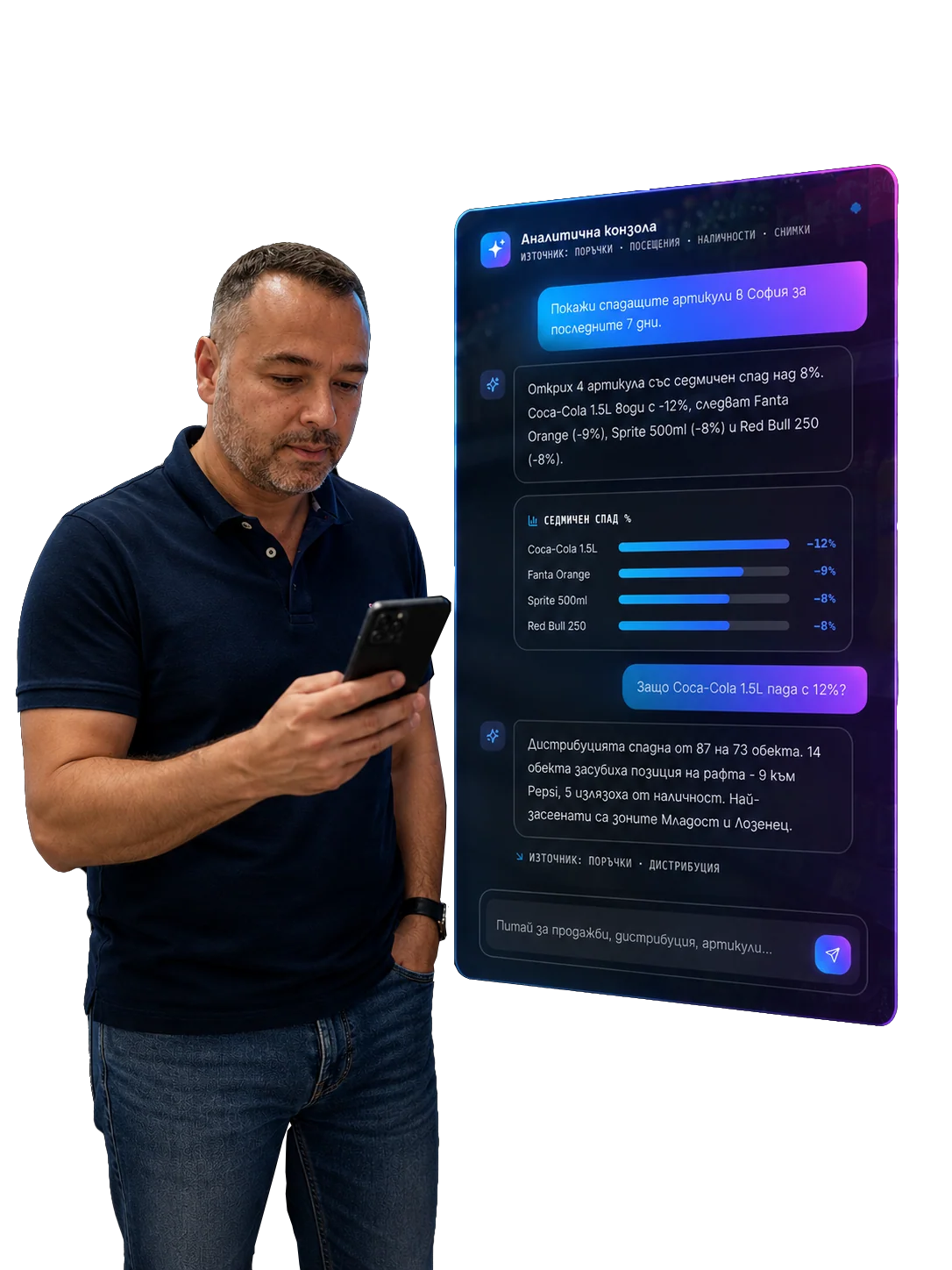
A good AI sales assistant is not a chatbot that talks a lot. It is a quiet helper that shows the right suggestion at the right moment: risk, argument, order, task or follow-up.
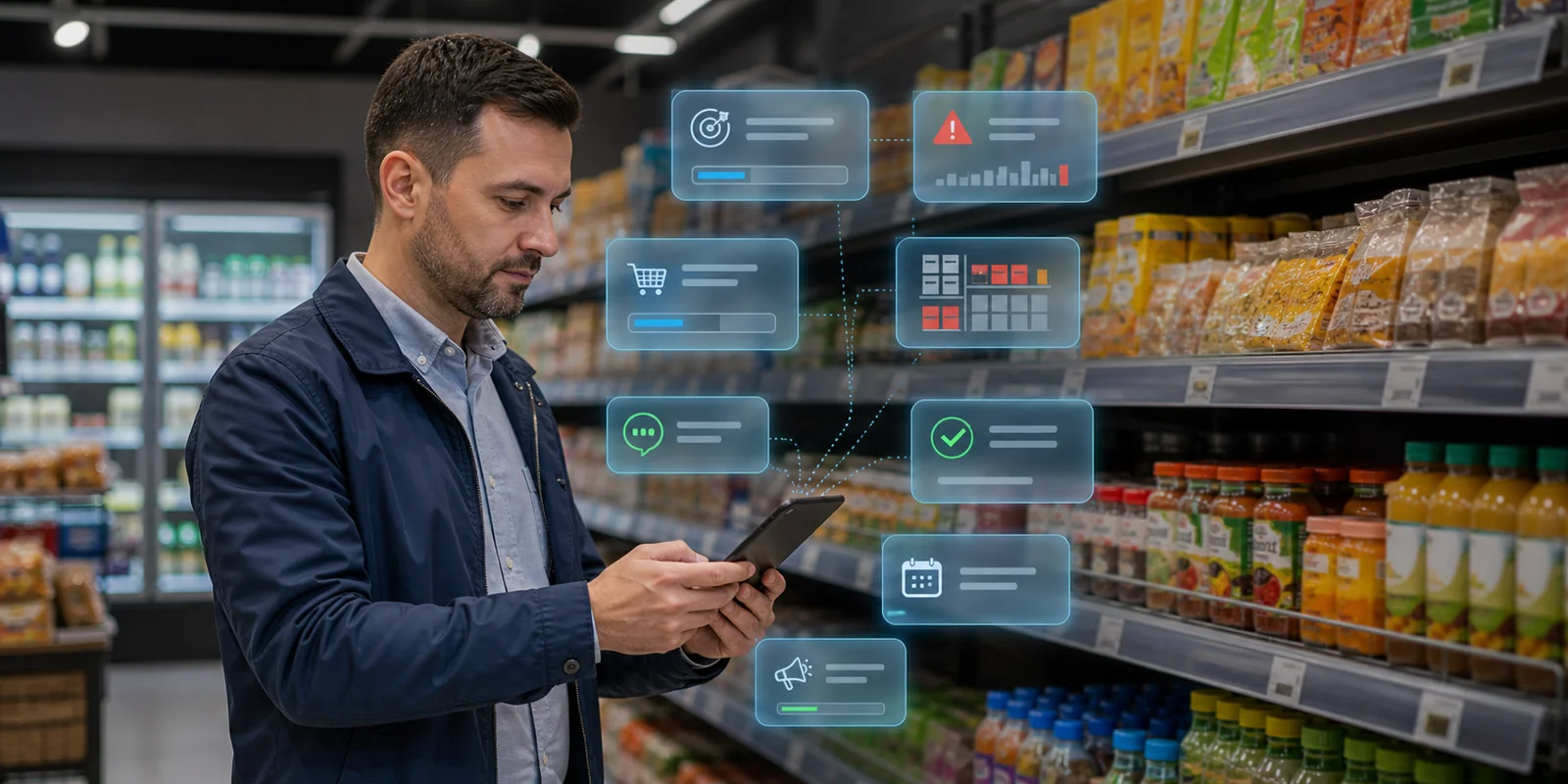
An AI sales assistant in FMCG should not be a chatbot that talks a lot.
The representative has no time for a long conversation with software while inside the store. There is a customer in front of them, a shelf to check, an order to take, a promotion to verify and the next outlet on the route.
That is why a good assistant should be quiet, specific and contextual.
Not ask "how can I help?".
But say:
"There is risk here. Check this. Suggest this. Here is why."
The AI assistant is not another screen
The biggest risk is that the assistant adds noise.
If the representative needs to read long explanations, open many cards or understand complex AI reasoning text, the system will slow them down.
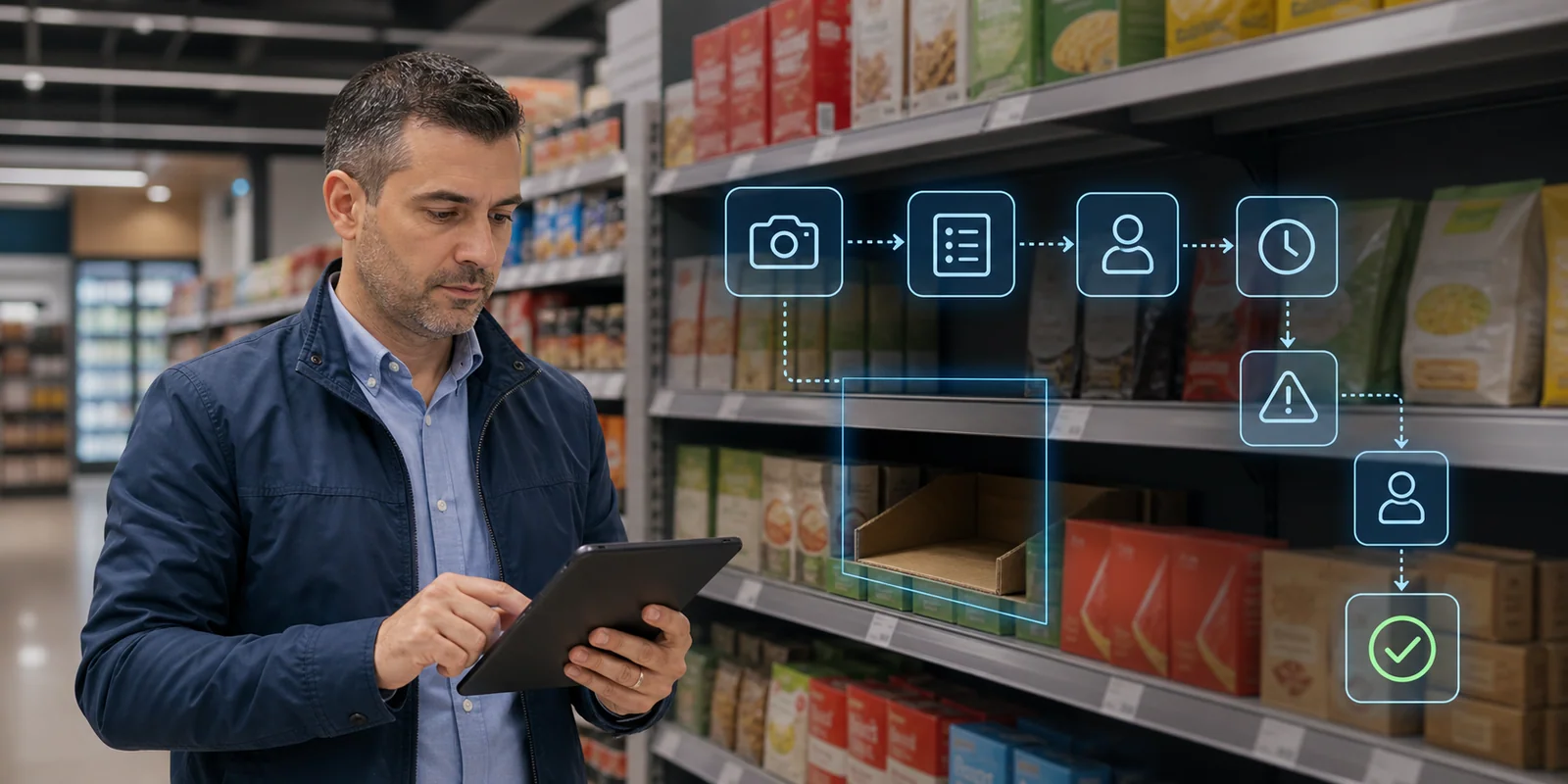
Inside the store, the assistant should work as a short decision layer:
- reason;
- recommendation;
- action;
- control.
Everything else is secondary.
Before the visit: visit brief
The first good suggestion comes before entering the outlet.
The assistant should show:
- why this outlet matters today;
- which SKUs are risky;
- whether there is an active promotion;
- what was not completed last time;
- whether there is an open issue;
- what the recommended order is;
- what the coaching focus is.
This connects to field sales visit planning and Optimasale. The representative should not enter the store blind.
At the shelf: what to check first
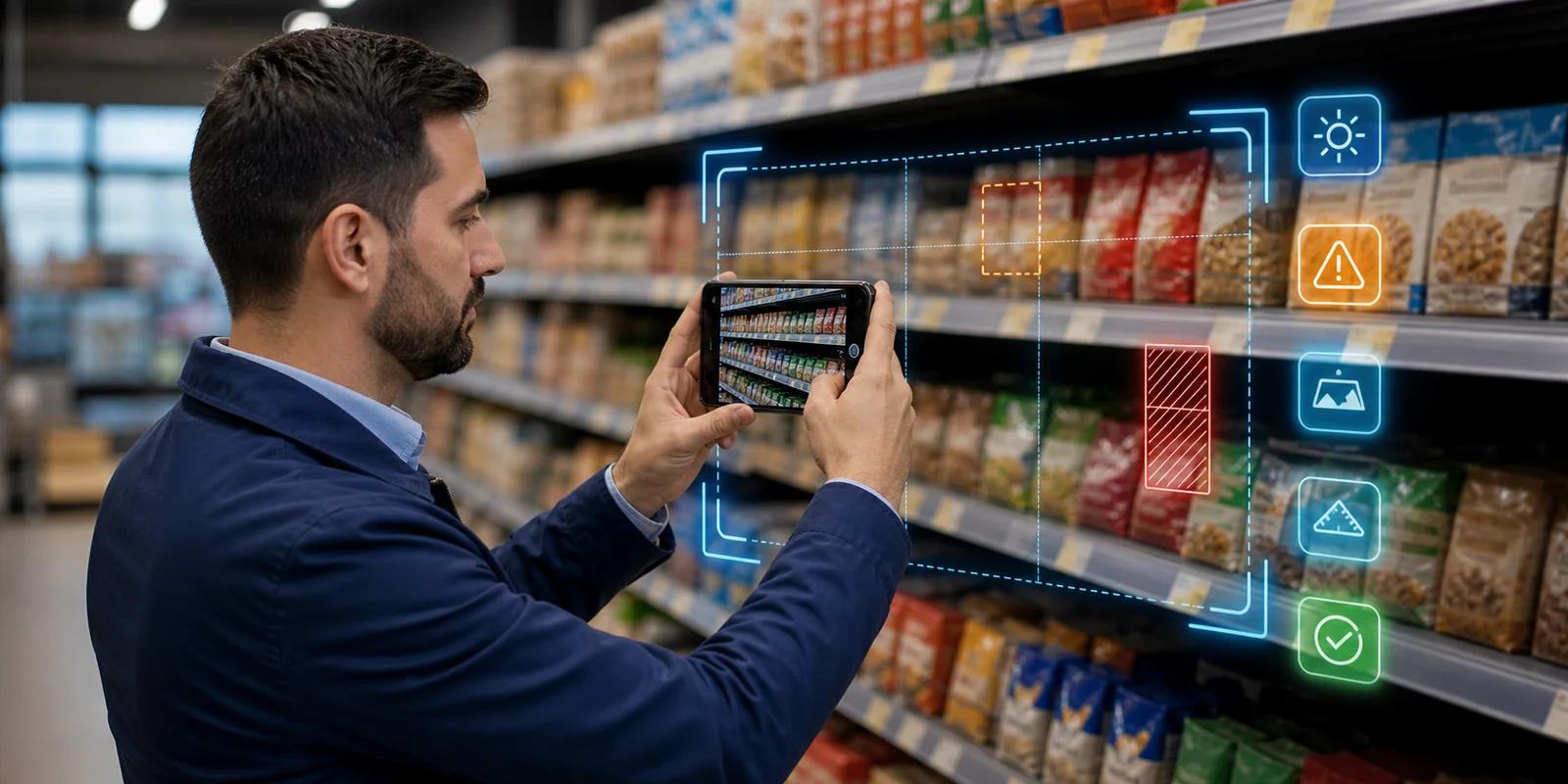
When the representative is in front of the shelf, the assistant should prioritize.
Not all SKUs are equally important. Not all shortages weigh the same.
Good suggestions:
- check hero SKU;
- this product was missing last time;
- there is OSA risk before the next visit;
- promo SKU should be on secondary placement;
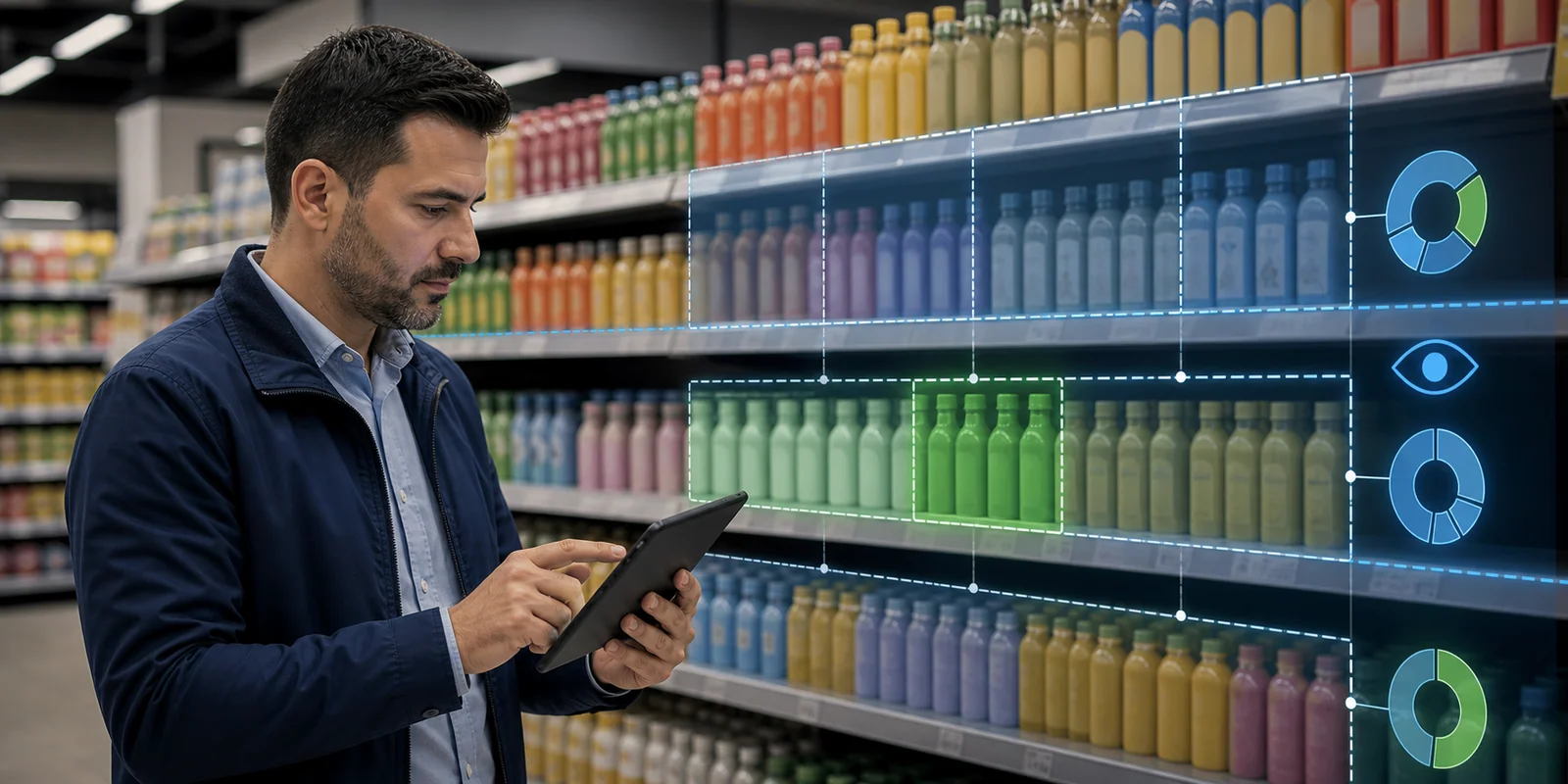
- share of shelf fell versus previous image;
- planogram gap affects Perfect Store score.
Image recognition provides the signals. The assistant should turn them into a short action.
At order taking: argument, not only quantity
Recommended order without reason is weak.
The representative should be able to explain to the customer why they suggest a quantity.
That is why AI Order Brain should provide assistant suggestions such as:
- "product runs out before next visit";
- "promotion starts this week";
- "previous order was reduced and led to OOS";
- "similar outlets order more in this period";
- "suggest a smaller increase if the customer fears overstock".
This is help in the conversation, not just AI prediction.
When the customer refuses
When the customer refuses, the assistant should not push mechanically.
It should help capture the right reason and suggest the next approach.
Example reason codes:
- cash flow;
- fear of overstock;
- lack of space;
- weak sell-out;
- competitor promotion;
- low trust in new SKU;
- delivery problem;
- price objection.
Then the assistant can suggest:
- smaller quantity;
- different SKU;
- follow-up;
- supervisor support;
- trade term check;
- coaching signal.
This matters for Sales coaching, because refusals are behavioral and commercial signals.
During promotions
Promotion is a moment where the assistant should be very specific.
Good suggestions:
- check promo price;
- check display;
- check availability for promo SKU;
- take photo for closure;
- if display is missing, create issue;
- if stock is insufficient, change recommended order.
Bad suggestion:
"Check the promotion."
That is too generic.
During follow-up
After the visit, the assistant should help actions not get lost.
Suggestions:
- "Create follow-up for missing display."
- "Supervisor approval is required."
- "Issue cannot close without photo."
- "This problem repeats for the third time."
- "Escalate to distributor."
Here workflow orchestration and AI agents are the natural layers: the assistant suggests, workflow manages, the agent helps with follow-up.
What the assistant should not do
Show too many alerts
If everything is important, nothing is important.
The assistant should filter.
Give recommendation without reason
"Order 12" is not enough.
It needs "why".
Interrupt the sales conversation
If the assistant requires many clicks, it gets in the way.
Hide uncertainty
If confidence is low, that should be clear.
Replace human judgment in relationship situations
Independent trade has context. AI should help, not command.
What makes the assistant good
A good AI sales assistant:
- knows outlet context;
- shows little, but important;
- gives reason;
- suggests next best action;
- allows override;
- captures reason codes;
- learns from result;
- does not punish the human for correction;
- connects shelf, order, route and coaching.
That is different from a generic chatbot.
In short
An AI sales assistant in FMCG should be a practical helper inside the store.
It should suggest:
- which risk matters;
- which SKU to check;
- what order to suggest;
- what argument to use;
- how to record refusal;
- what follow-up action to create;
- when to escalate;
- what to close.
The representative does not need more information.
They need a better next step.
Related in Optimasoft
- Optimasale is the field layer where AI assistant suggestions appear during the visit.
- AI Order Brain provides recommended order and reason signals.
- Image recognition provides shelf and OSA signals.
- Sales coaching uses behavior and refusals for specific support.
- FMCG sales representative 2.0 places the assistant inside the broader day of the representative.
Sources
Related articles